By most cyclists’ standards, it’s not an impressive ride. No training objective, a lot of unpredictable movement, and a complete lack of lycra. Some riders are still figuring out how to pedal and shift gears. But on this quiet Wednesday morning in Greenpoint, a group of children, parents, and volunteers gather with one remarkably simple objective: to ride their bikes to school.
I spend a good amount of time riding bikes. The satisfaction from a hard effort, the accountability of a structured training plan, and the hard-earned results come race day are tangible drivers of why I love this sport. Volunteering with the PS 110 Bike Bus has given me a different perspective. Sometimes the best thing you can do on a bike is slow down.
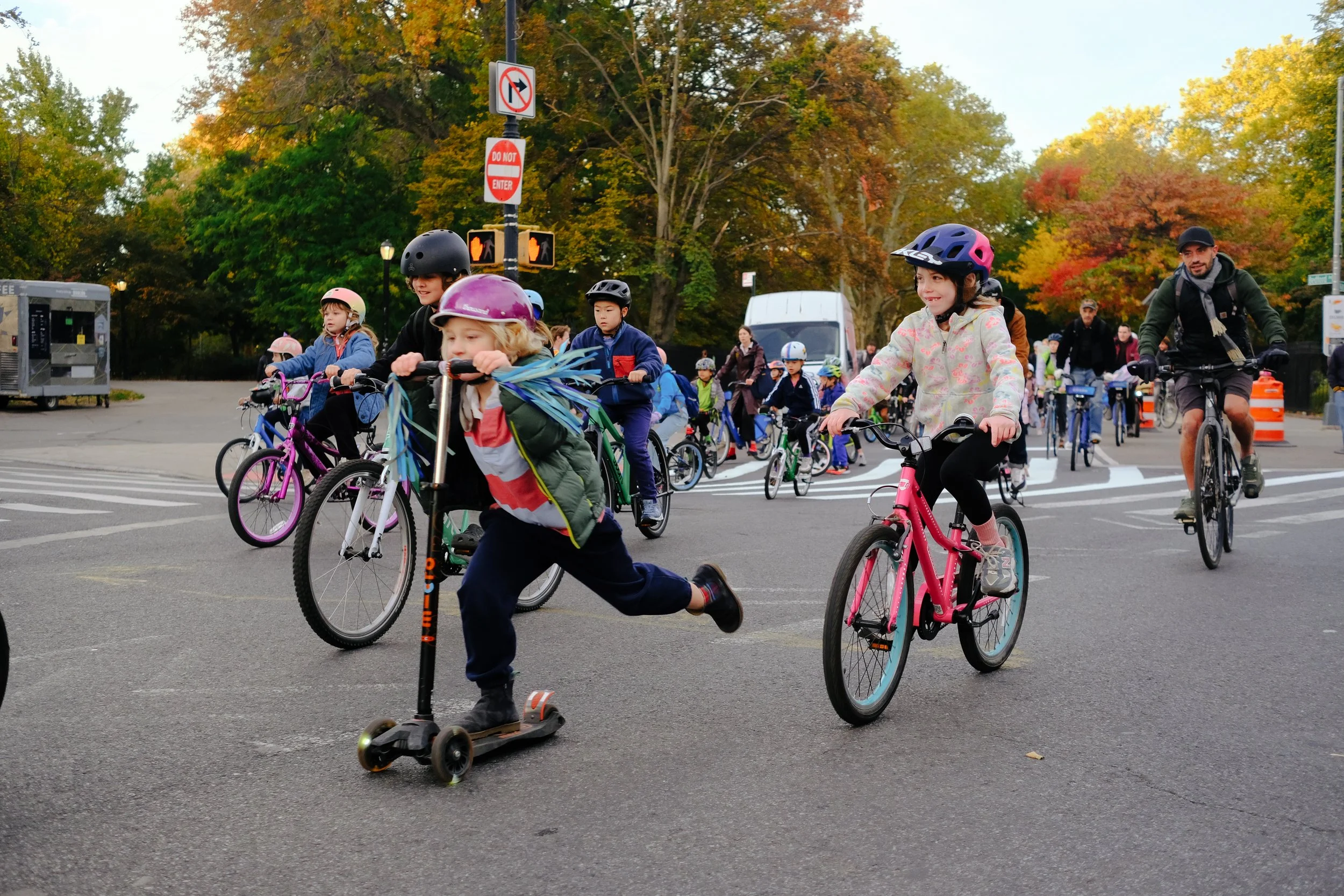
The Bike Bus rolling through Greenpoint, Brooklyn. Photos throughout by Steph
I started riding with the bike bus after a neighborhood friend mentioned it in passing. I had seen videos online of similar endeavors, but I never thought I’d find myself volunteering for something like this, mainly due to the fact that I don’t have a child. When I rolled up to my first ride, I started to understand the true value of the bike bus. The group of volunteers, sporting high-vis vests and hand-painted signs, come from a variety of backgrounds, brought together with the shared drive to deliver the quintessential childhood experience of riding your bike to school, something many city-kids otherwise lack.
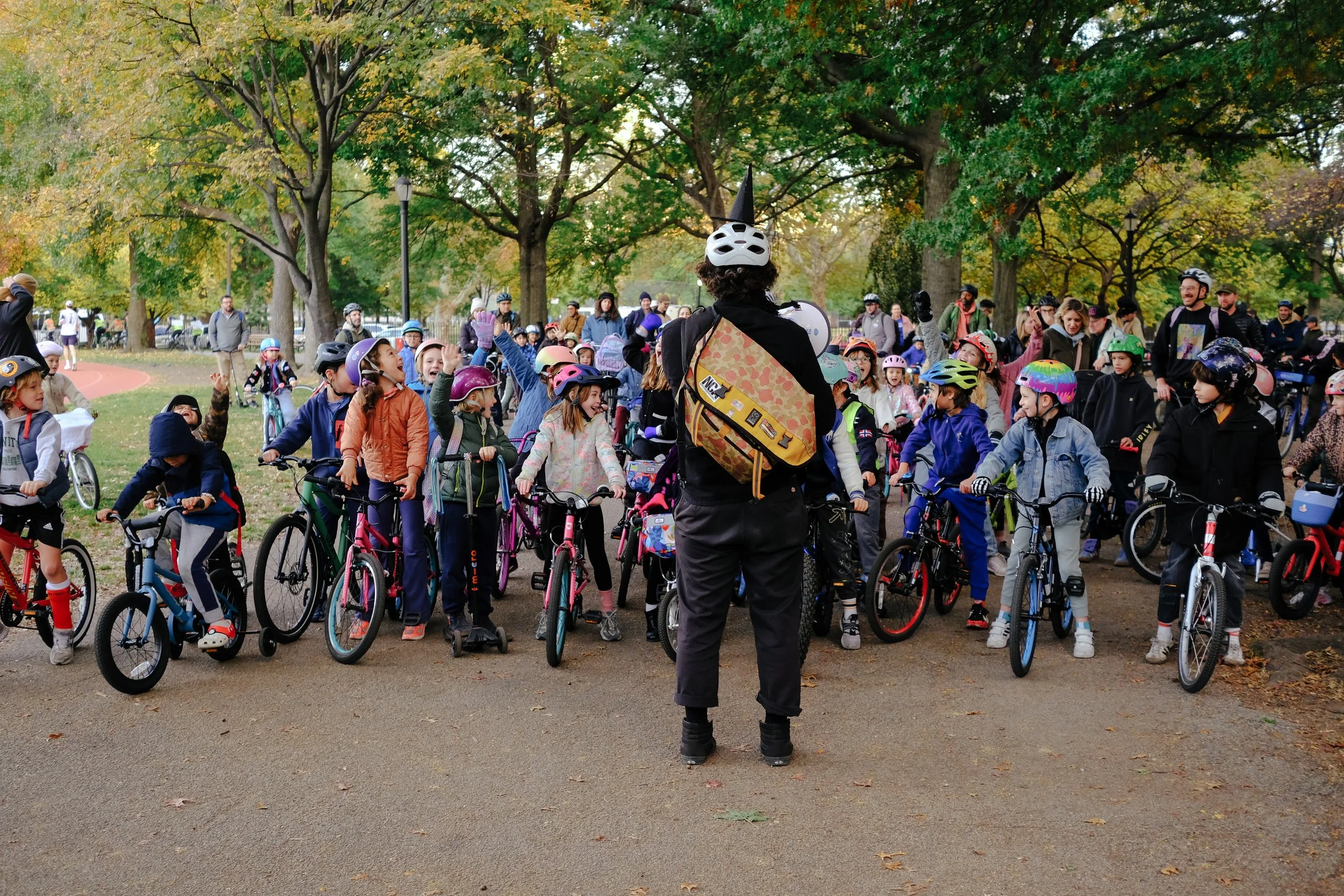
Chris Roberti speaking safety to the children.
As we congregate at McCarren Park, childhood chatter is at its peak. The crowd of elementary schoolers is hushed so that Chris Roberti, organizer of the bike bus, can give his safety speech. He outlines the 2-mile route to school, safety considerations, and invites everyone for coffee and snacks after the ride (all cyclists, regardless of age, know it’s all about the post-ride treats).
A number of factors contributed to the shaping of PS 110’s Bike Bus, according to Roberti. In the summer of 2020, the NYC Justice Rides provided a response to the murder of George Floyd and exposed the power and strength of collective participation. Parts of the city like our highways and bridges, normally reserved for cars, were suddenly reclaimed by flocks of cyclists. Popular videos of Barcelona’s Bicibús, a similar bike to school effort, caught Roberti’s attention online. The idea resonated as Roberti recalled chaotic scenes of morning drop-offs and the sheer volume of cars at his child’s school. Finally, tragedy struck in May of 2021 as Matthew Jensen, a beloved teacher at PS 110, was killed in a hit-and-run collision while riding his bike in Greenpoint. Jensen’s heartbreaking death heightened an already growing concern surrounding street safety in the neighborhood. In response, the bike bus was formed.
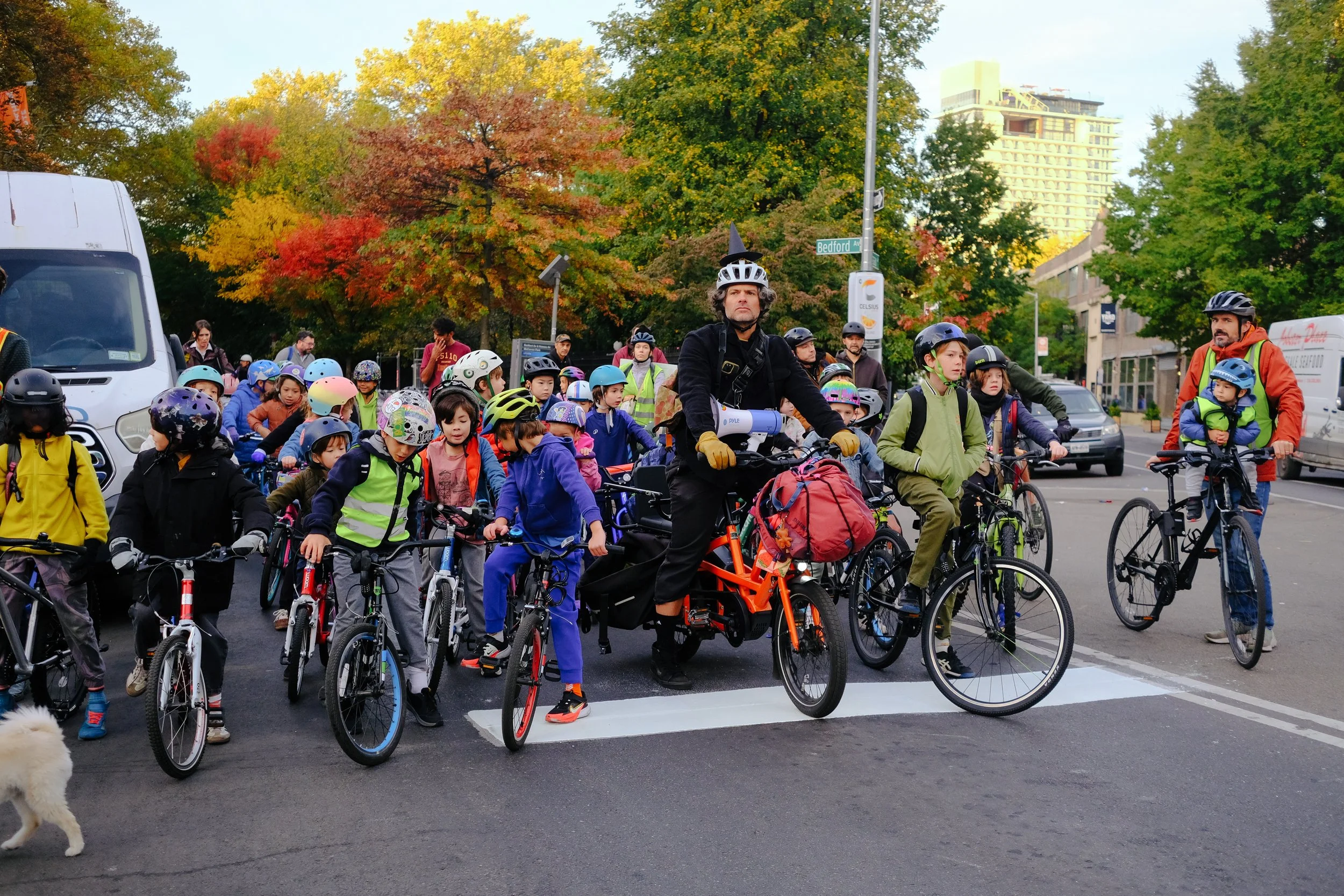
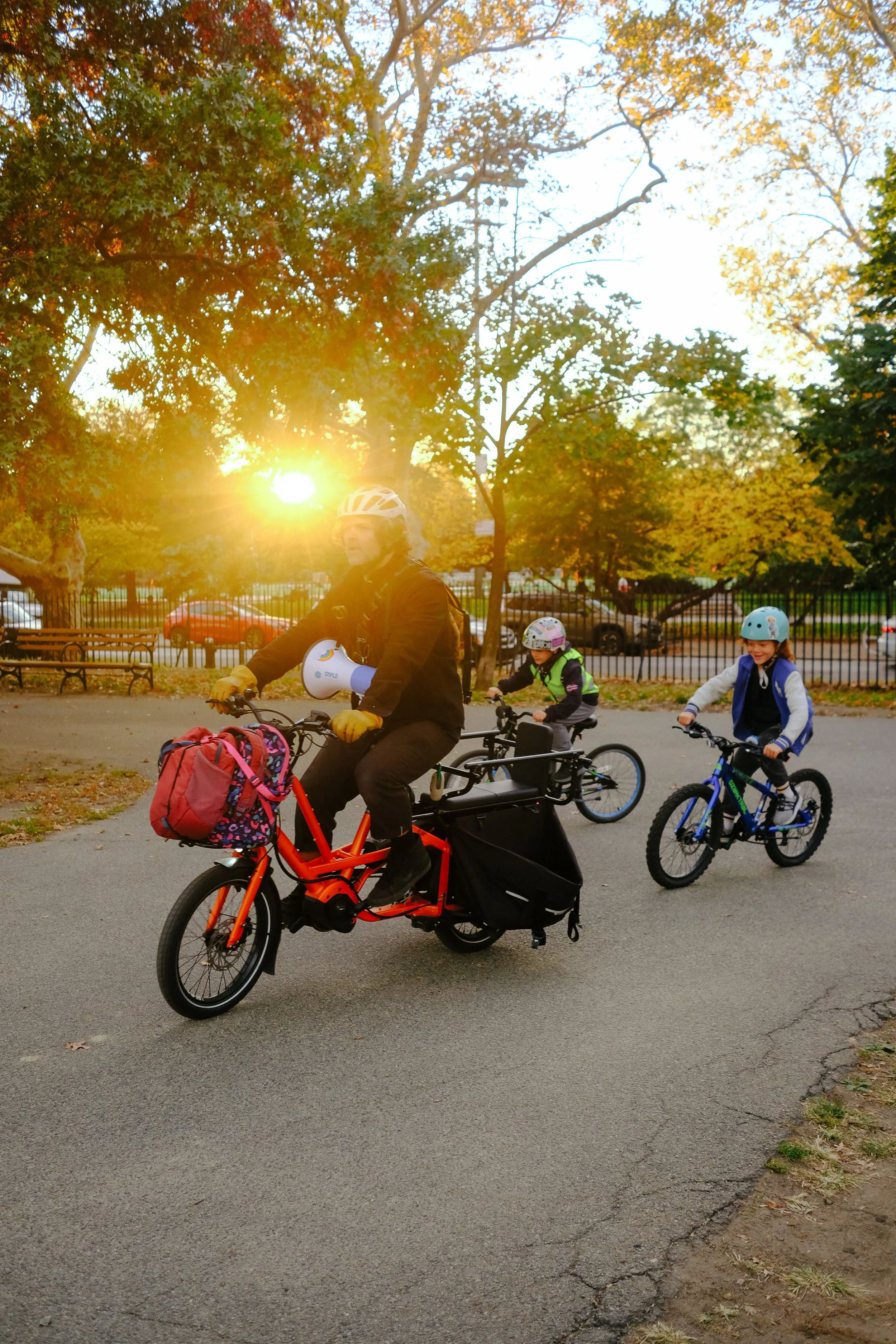
Chris Roberti leading the Bike Bus as the group congregates at an intersection.
Getting the bike bus idea off the ground was not entirely straightforward. School administration had their hesitations, including safety, inclusivity, and requiring participating families to sign waivers acknowledging that this activity was taking place outside of school. Roberti persisted, and these concerns proved to be short-lived. The first bike bus in the Spring of 2022 drew approximately 80 participants. It was an immediate success.
Four years later, the movement has grown with more than 200 parents and children participating on a monthly basis. The bike bus has expanded from PS 110, and now involves other local elementary schools including PS 31, PS 34, and St. Stan’s. The bike bus is no longer considered a liability to the school administration, in fact, they flaunt it as an institution of the neighborhood. Roberti even recounts hearing of parents choosing PS 110 for their children due to the bike bus, alone.
Of course, safely escorting a couple hundred elementary schoolers across the neighborhood is no easy task.
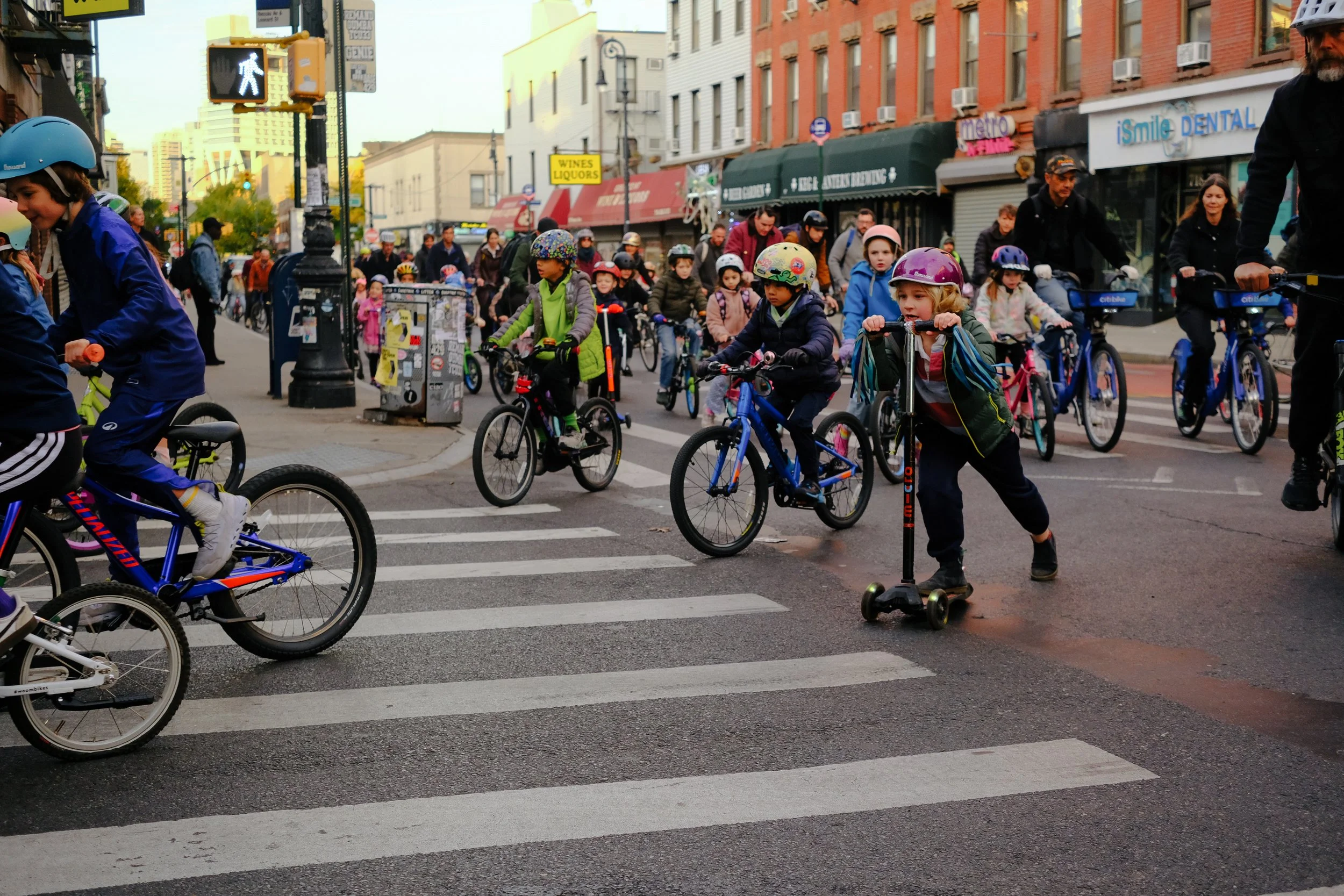
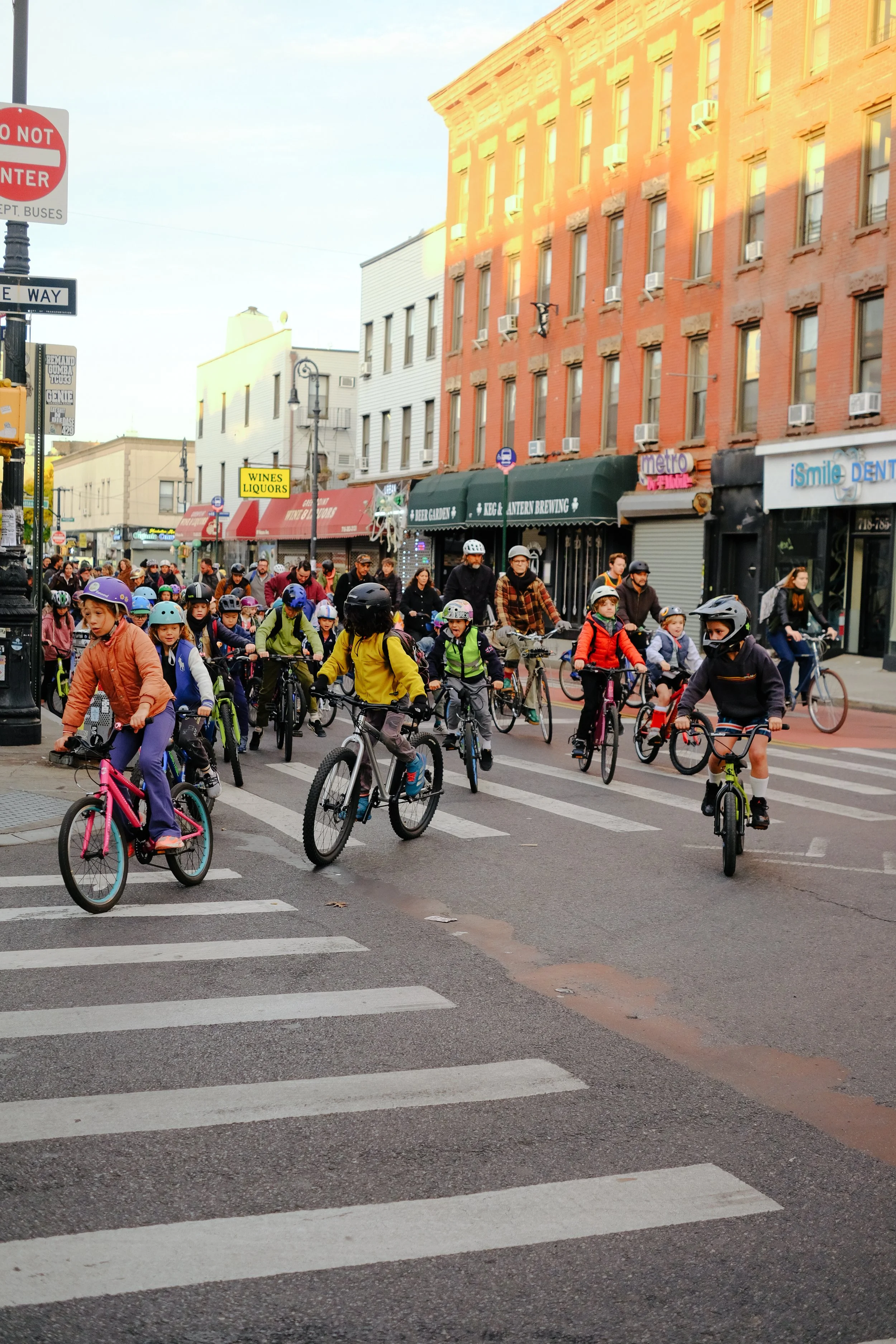
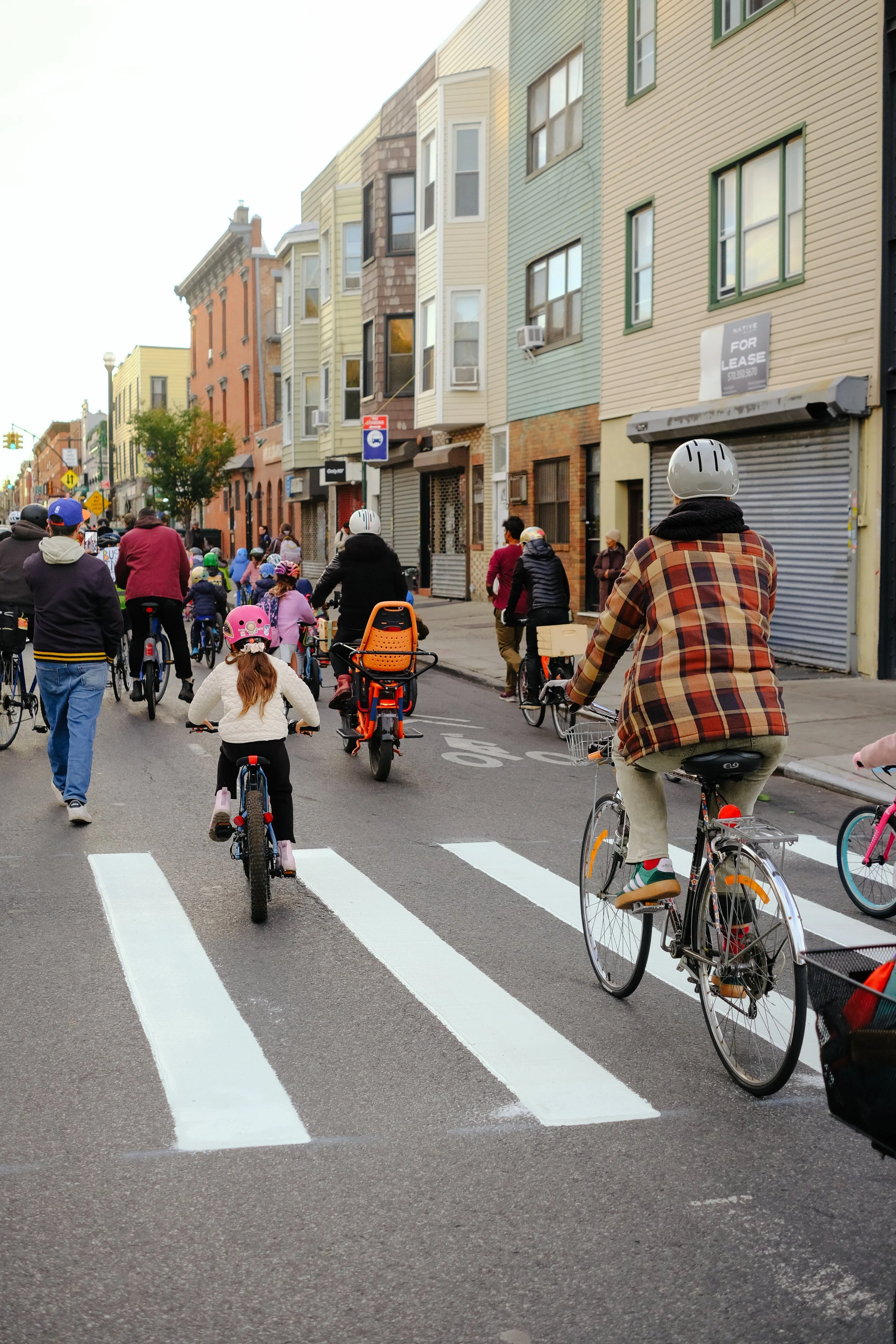
Children and parents rolling through the neighborhood.
Roberti likens organizing the bike bus to throwing a party. First, you are unsure if anyone will show up. This is followed by the fear that too many will show up. Will enough volunteer bike marshals be there to chaperone the kids? Is everyone going to show up on time? Are there enough mini chocolate croissants waiting for us at the schoolyard to satiate 200 fourth graders?
The role of the volunteer can be plainly summarized as “keep the kids safe.” We ride ahead of the group to block intersections and pedal alongside to encourage some semblance of order, all while the caboose follows behind to ensure all children, no matter their pace, get to enjoy the morning festivities. The network of volunteers and organizers, gathered largely through word of mouth and neighborhood groups, has become indispensable.
But the true value of the bike bus can be found within the kiddie peloton.
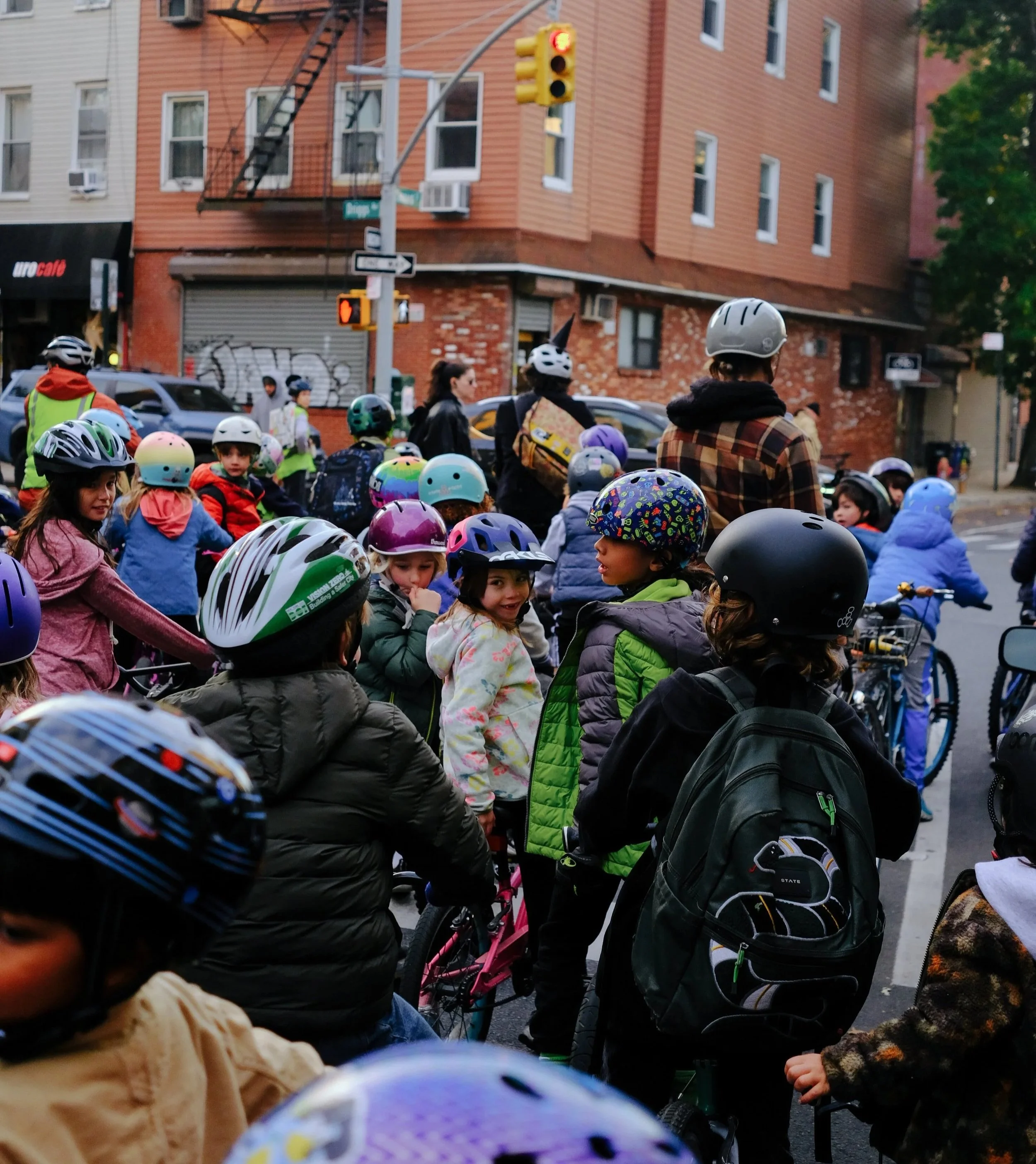
The Bike Bus waiting patiently for the green light.
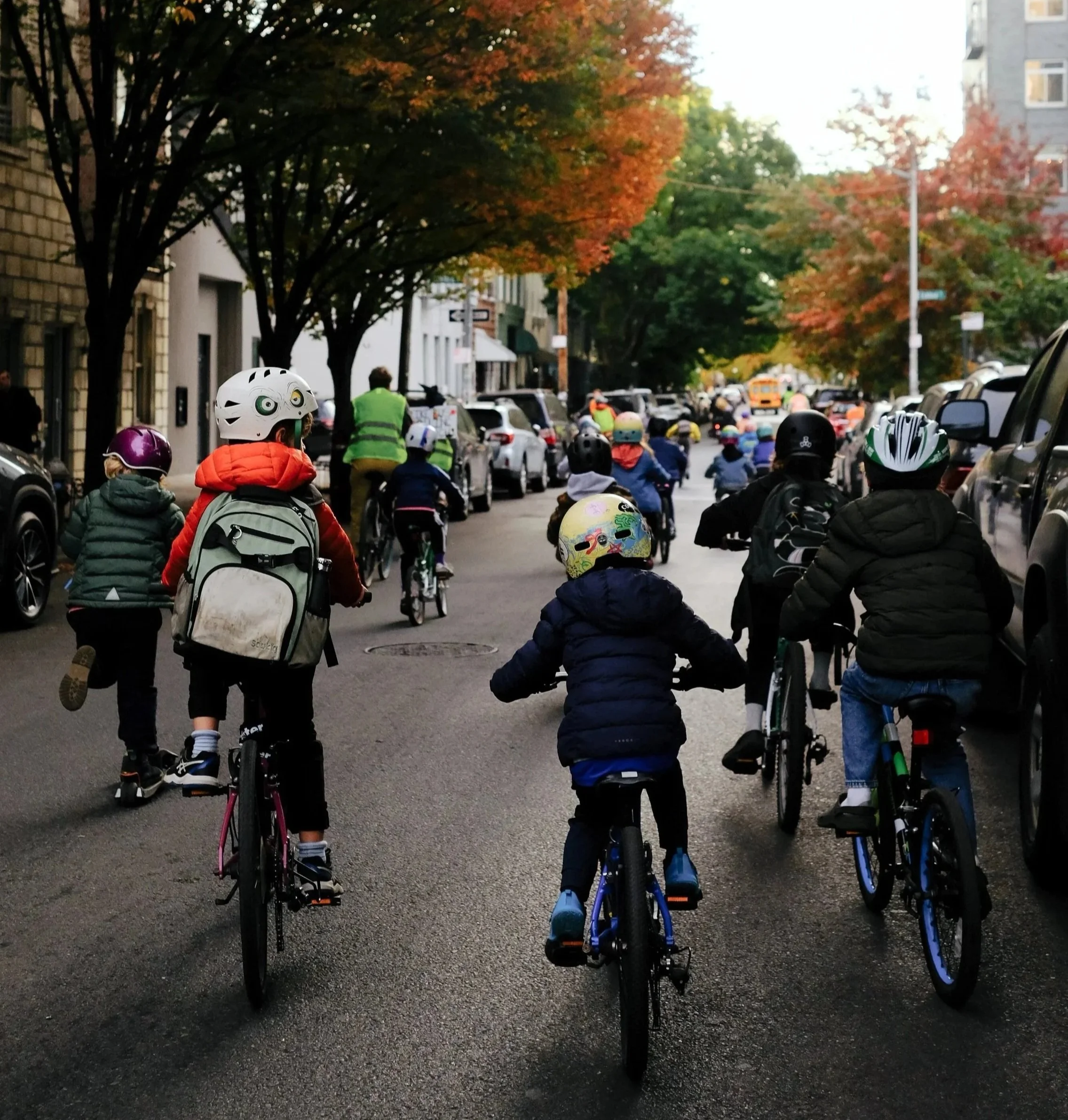
As the group embarks on its journey, you can feel the visceral excitement of the crowd and the novelty of this experience. Roaring laughter fills the street. Two friends race to the next traffic light. One sweaty parent runs to catch the group, balance-bike in one hand and kindergartener in the other. As the stampede of little ones and the chorus of bells pass through the neighborhood and across McGuinness Boulevard, I can’t help but smile. It would be hard to find a happier group of people this Wednesday morning.
When I asked Roberti about a memorable moment from the bike bus, he recalls becoming emotional during those first rides. He recounts other parents crying at the site of their young ones riding to school alongside classmates and friends.
"It's like flying," he tells me. "It really is like freedom and joy."
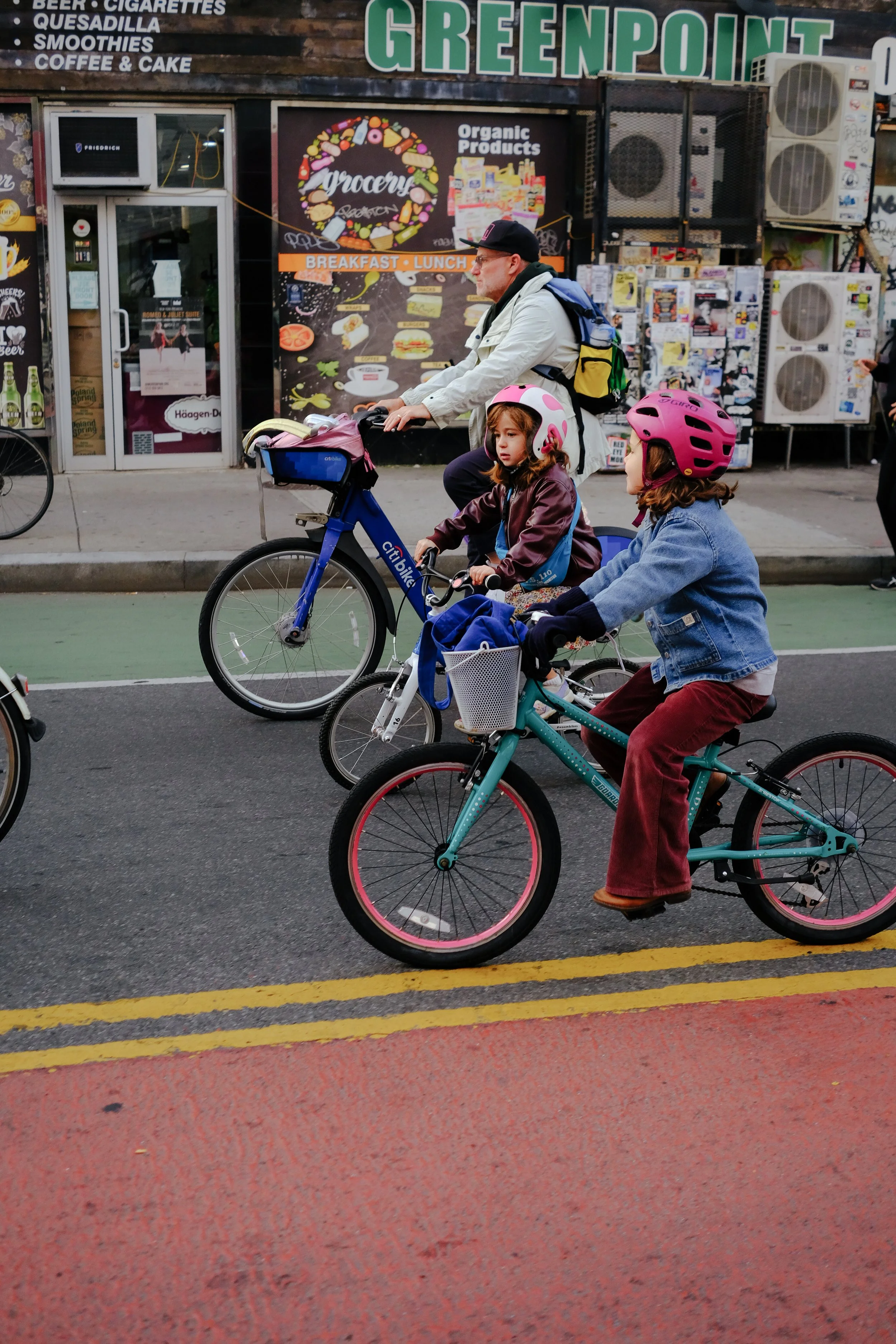
Yet, beneath the joy, an uncomfortable question keeps running through my mind: why does something as simple as riding a bicycle to school require an organized group of parents, volunteers, and safety marshals to make it possible?
For many families, allowing your child to ride their bike to school independently doesn’t feel safe enough to make it an everyday experience. The bike bus creates temporary safety through numbers, while the coordination efforts expose the challenges that remain. I’ve come to understand the bike bus as two things simultaneously: a celebration of what our streets could be, and a reminder of what our streets currently are.
For Roberti, the connection between the bike bus and broader neighborhood safety efforts is fundamental. "It's an imagination thing," he says. "It's like building the streets that you want."
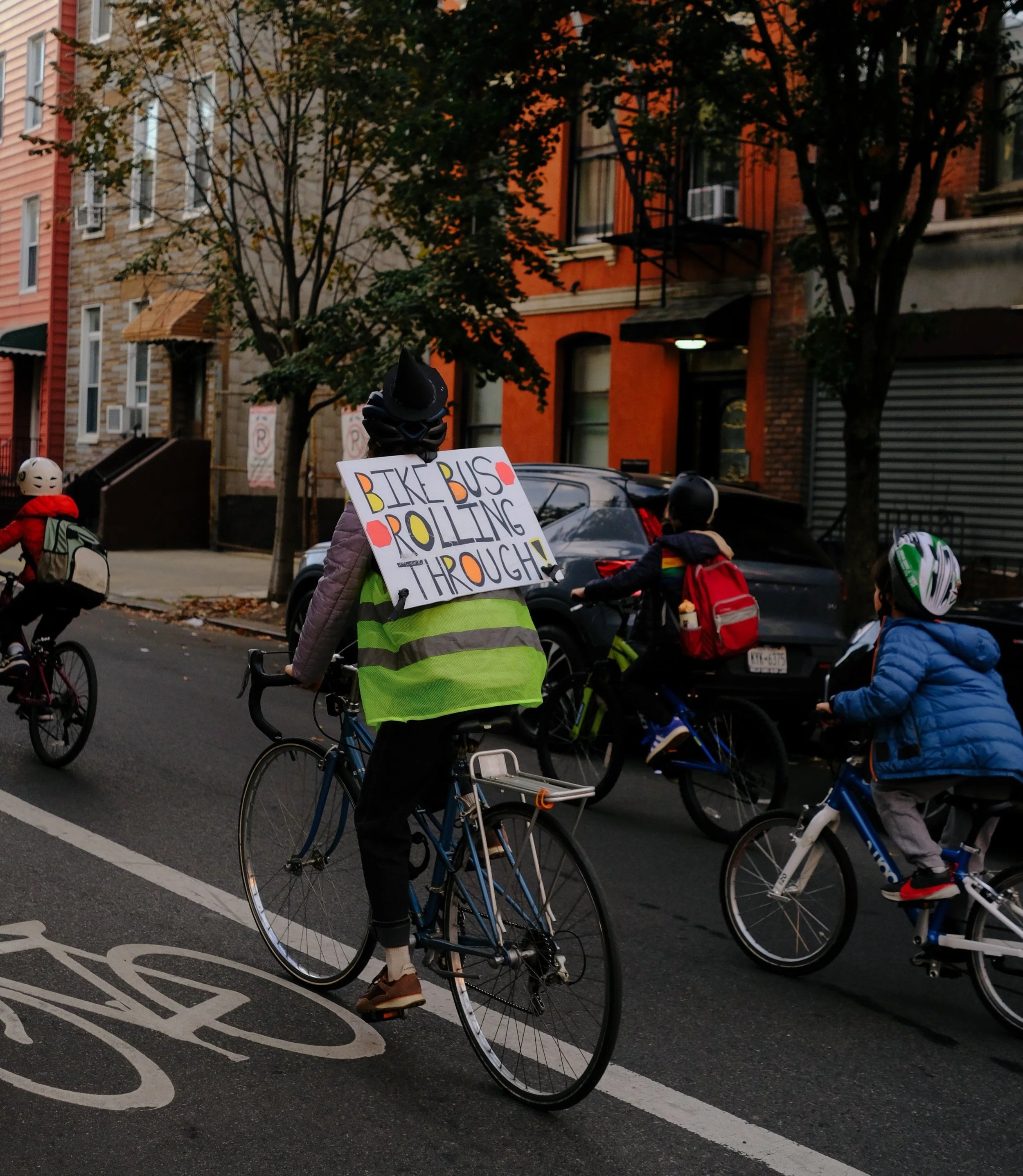
Volunteer marshal riding alongside, sporting high-vis vest and hand-painted sign.
While progress has not come easily, local organizers like Roberti have nevertheless spent years pushing to make cycling and pedestrian life more accessible across the neighborhood. Successes in recent years, like the McGuinness Boulevard Redesign and recent PS 110 Safe Streets projects, reflect tangible changes resulting from rejecting the status quo, community organizing, and engaging in conversations with neighbors and local representatives.
The ambitions behind the bike bus don’t stop there. Roberti hopes the experience becomes so ordinary that it is cemented as an expectation for kids to come, rather than a monthly change-of-pace. He wants to see the bike bus keep expanding, become more self-sustaining, and continue to grow the community that fosters it. His eventual desire is to see an inter-connected network of bike corridors between schools and parks, void of cars, for children to enjoy without needing to negotiate with traffic.
Perhaps the ultimate success of the bike bus shouldn’t be measured by how many kids participate, but whether those same children would one day feel comfortable riding to school without it. Not because the bike bus no longer serves a purpose, but because it becomes a choice rather than a necessity.
I’m grateful for the bike bus and the opportunity it has given me to connect with my neighborhood. In a sport so focused on performance, marginal gains, and results, it reminds me what I love most about cycling: the community that comes with it.
At the end of the day, we all just want to ride bikes with our friends.
All photos throughout this post by Steph Mangan
