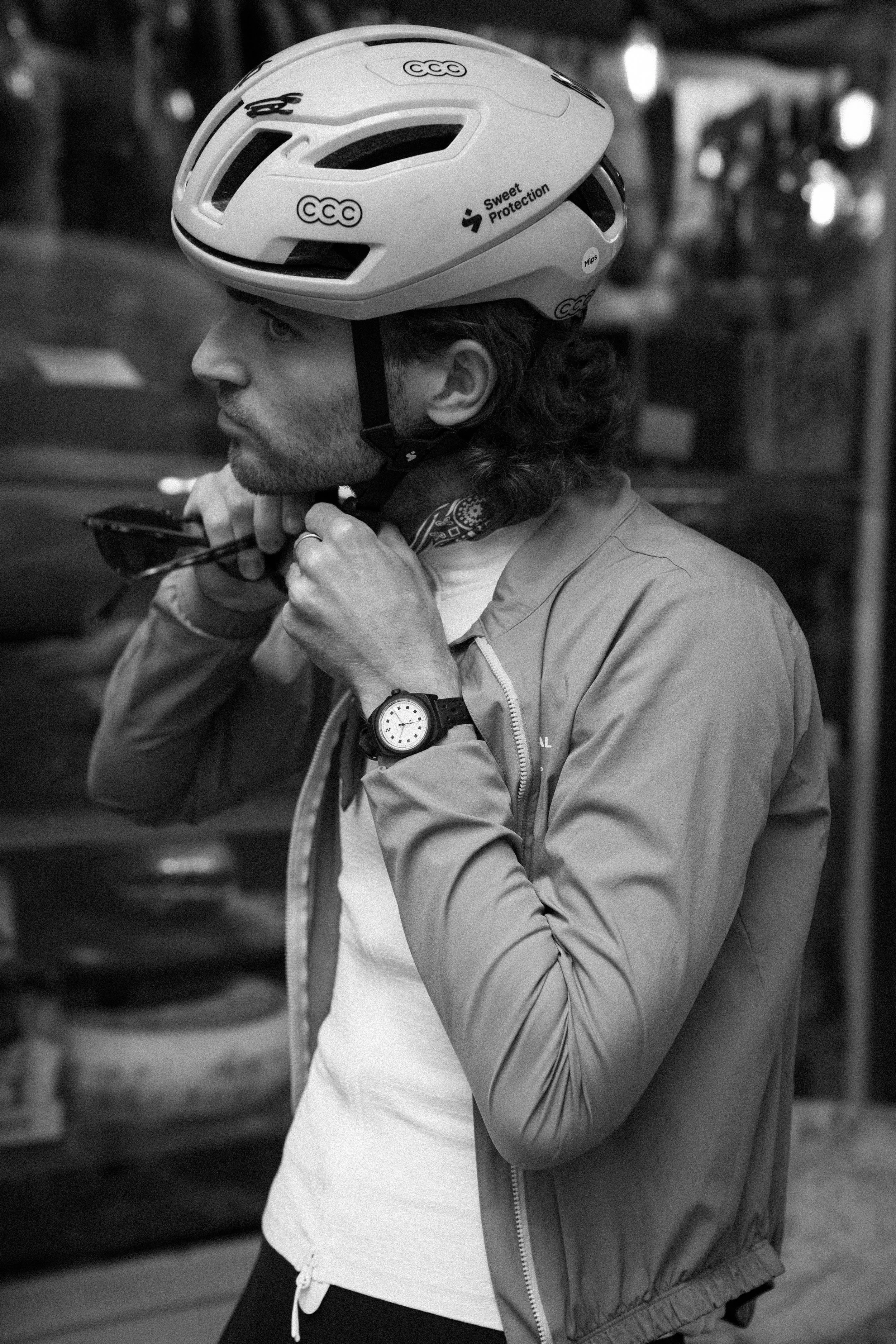
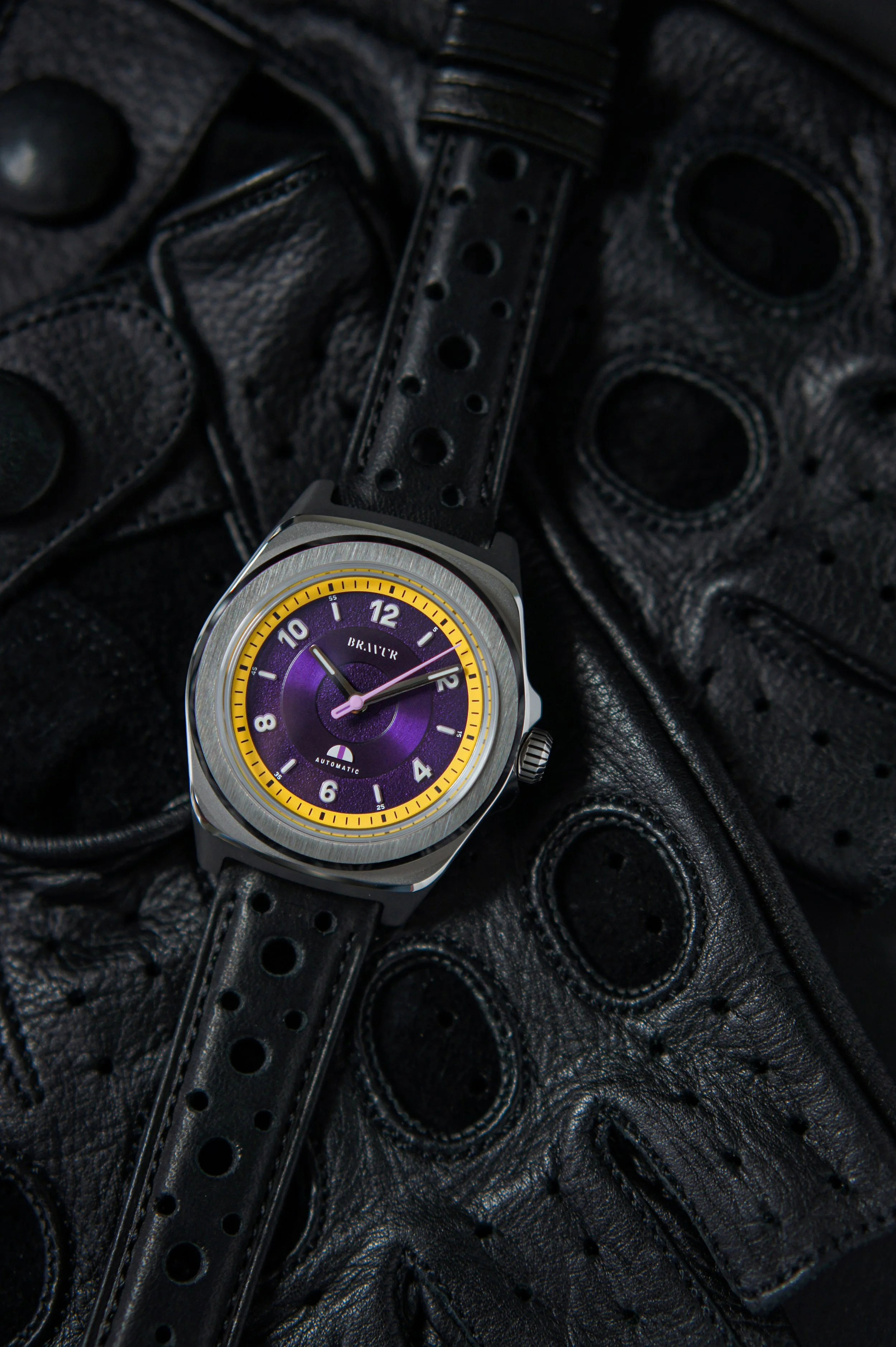
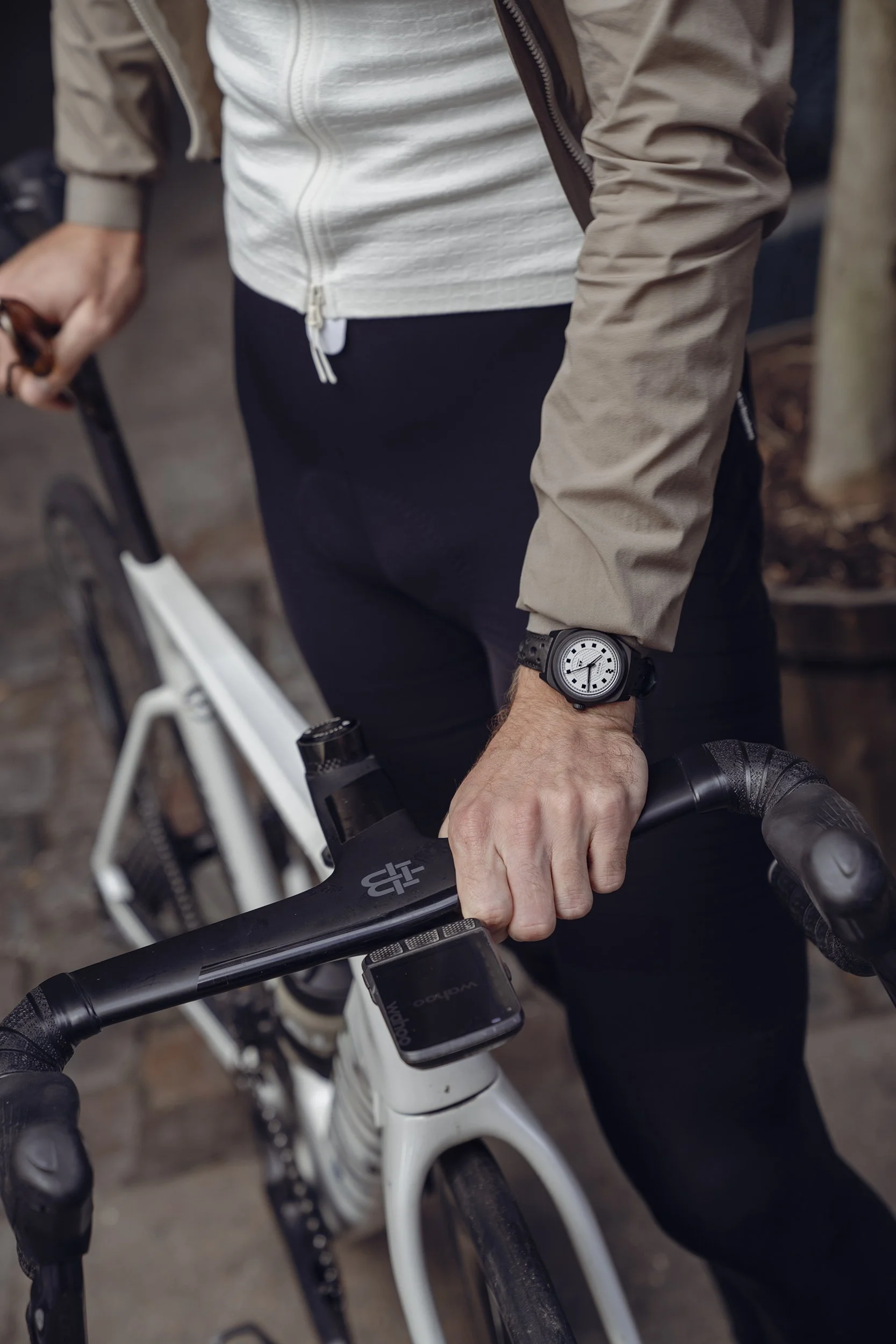
Rider wears the Peugeot model in PVD black on a black perforated leather strap (image courtesy of Bravur Watches)
Two years ago, we profiled Bravur watches, the most cycling-focused watch brand we’ve come across. While other brands like Tudor have released cycling-themed watches, cycling has been at the core of Bravur’s designs from its inception. In that profile, we had the pleasure of speaking with Johan, one of the brand’s two co-founders, about the growing brand, the role watches play in cycling, and vice versa.
At the time, Bravur had launched released the Grand Tour III series, a set of colorful chronographs with one dedicated to each of the Tour de France, the Vuelta, and the Giro. These compact automatic chronographs included not only visual nods to the three most vaunted stage races, but also incorporated features for use on the bike: a 15-minute counter to time intervals and a 12-hour counter to time rides (I have yet to ride more than 12 hours on a day so this watch would more than suit my needs for a typical 3-4 hour Sunday spin).
Since our last piece, we’ve had the pleasure of meeting with Johan and Magnus at the 2024 and ’25 Windup Watch Fairs here in NYC, the proverbial mecca for small independent watch brands like Bravur. We were lucky enough to go hands on with their Team Heritage collection, and were so taken with the watches that we wanted to feature them on the blog. Johan was kind enough to share additional color on these new watches and provide wonderful photos for us to showcase the watches (see enclosed).
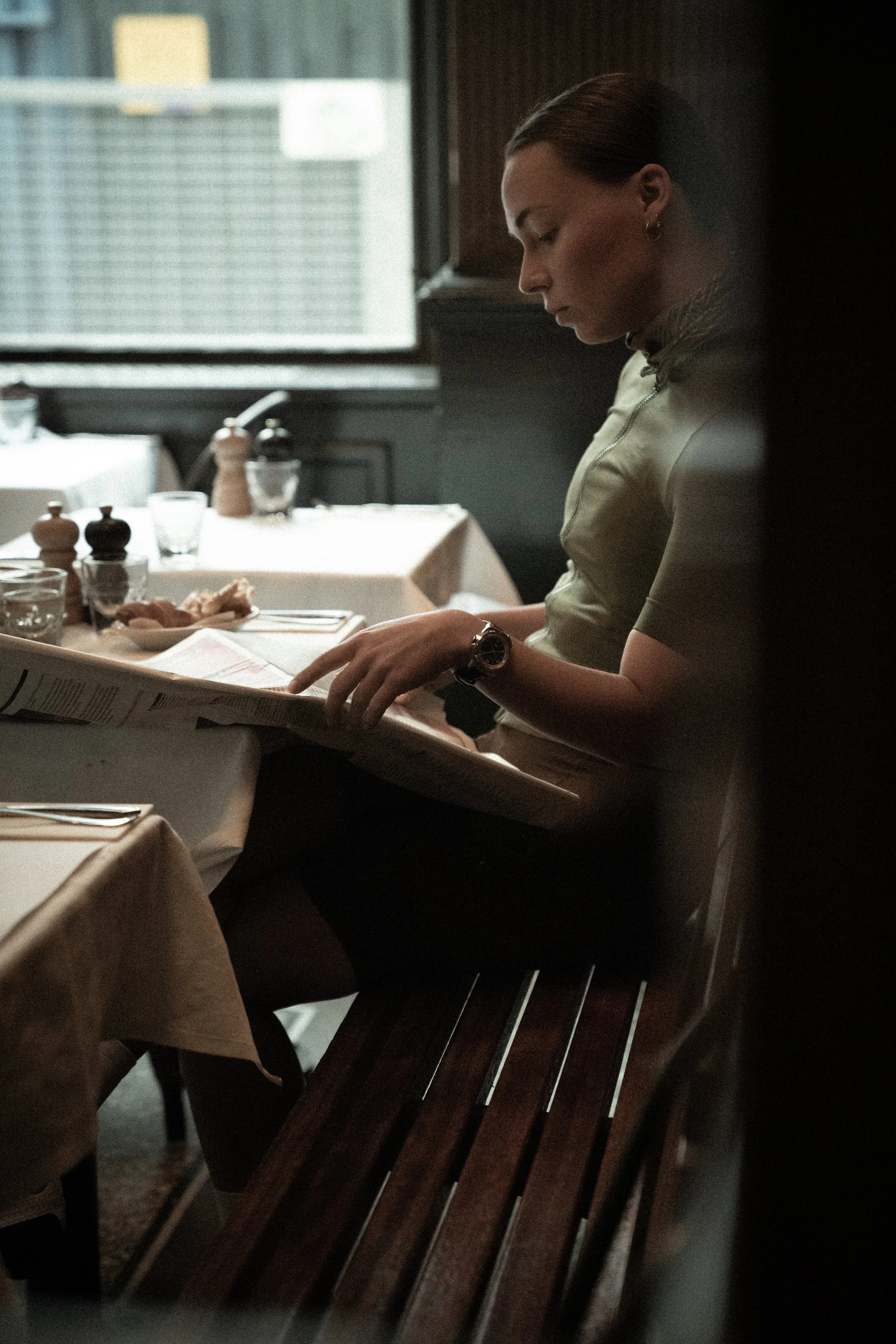
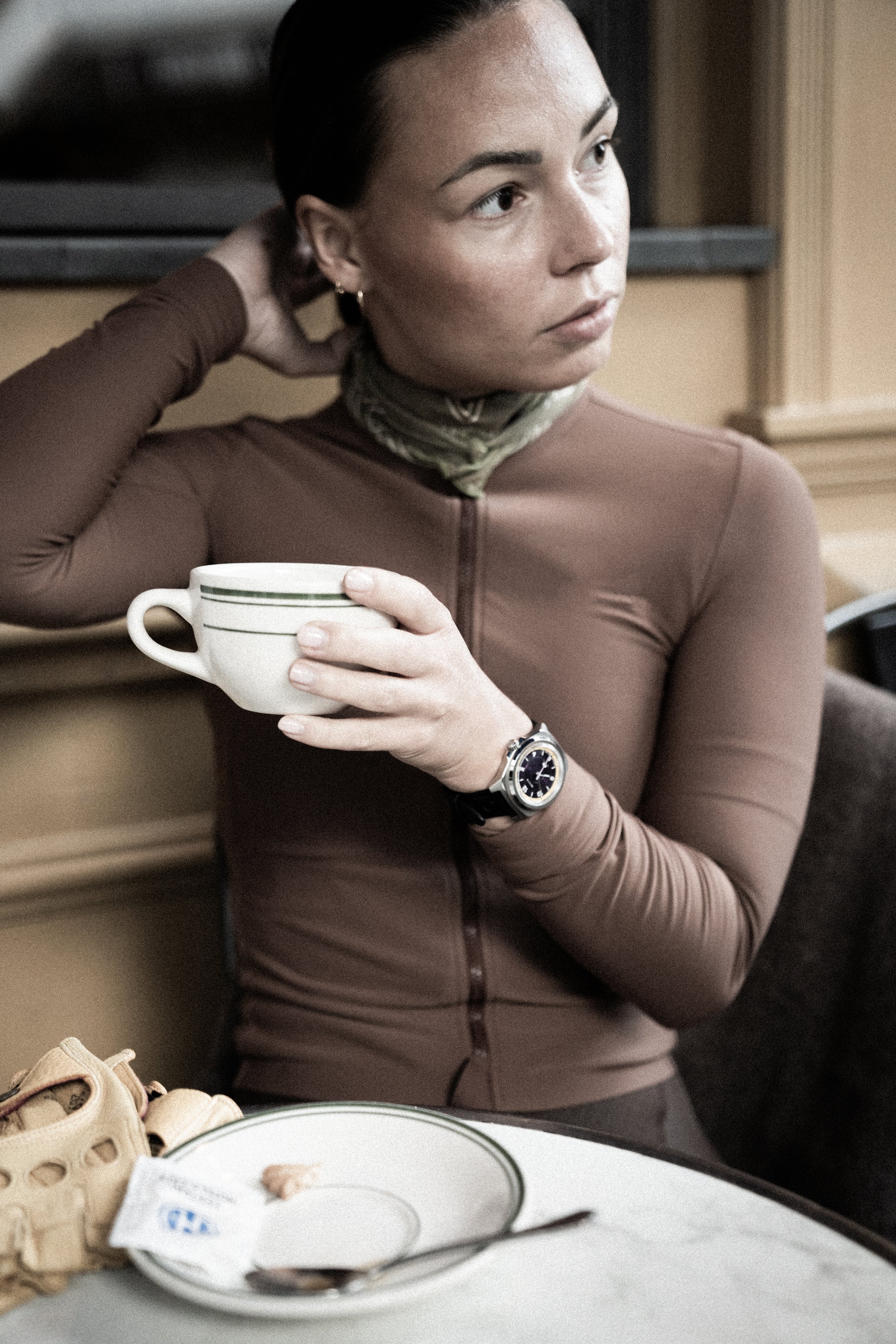
Rider enjoys a cafe stop with the Mercier model (image courtesy of Bravur Watches)
Bravur's inception
As a refresher from our Q&A, Bravur was founded by Johan and Magnus, two friends who first raced mountain bikes against one another in the ‘90s. Avid riders and professional cycling fans for over 30 years, and with backgrounds in design and engineering, they share a passion for both cycling and watches.
When launching Bravur in 2020, the duo wanted to build a cycling-first watch brand that created watches for cyclists rooted in cycling history. They didn’t just want cycling to appear as a decorative flourish on the dial, but an integral part of their timepieces. Moreover, they wanted to create watches cyclists could wear both on and off the bike.
Team Heritage collection
As noted above, Bravur debuted with its Grand Tour series of chronographs. Now it its 4th iteration, each edition offers slight variations in dial execution while retaining the same overall case shape and thematic coloring from the respective grand tours.
For their second installment, Bravur has extended their cycling-focused line with the Team Heritage collection. Comprising four watches, each piece in the collection features an iconic World Tour team that dominated the sport between the 1960s and ‘80s. The collection captures nostalgia for a bygone era in road cycling, where panache reigned supreme and a power meter referred to the box in your garage that recorded your electricity use for the month.
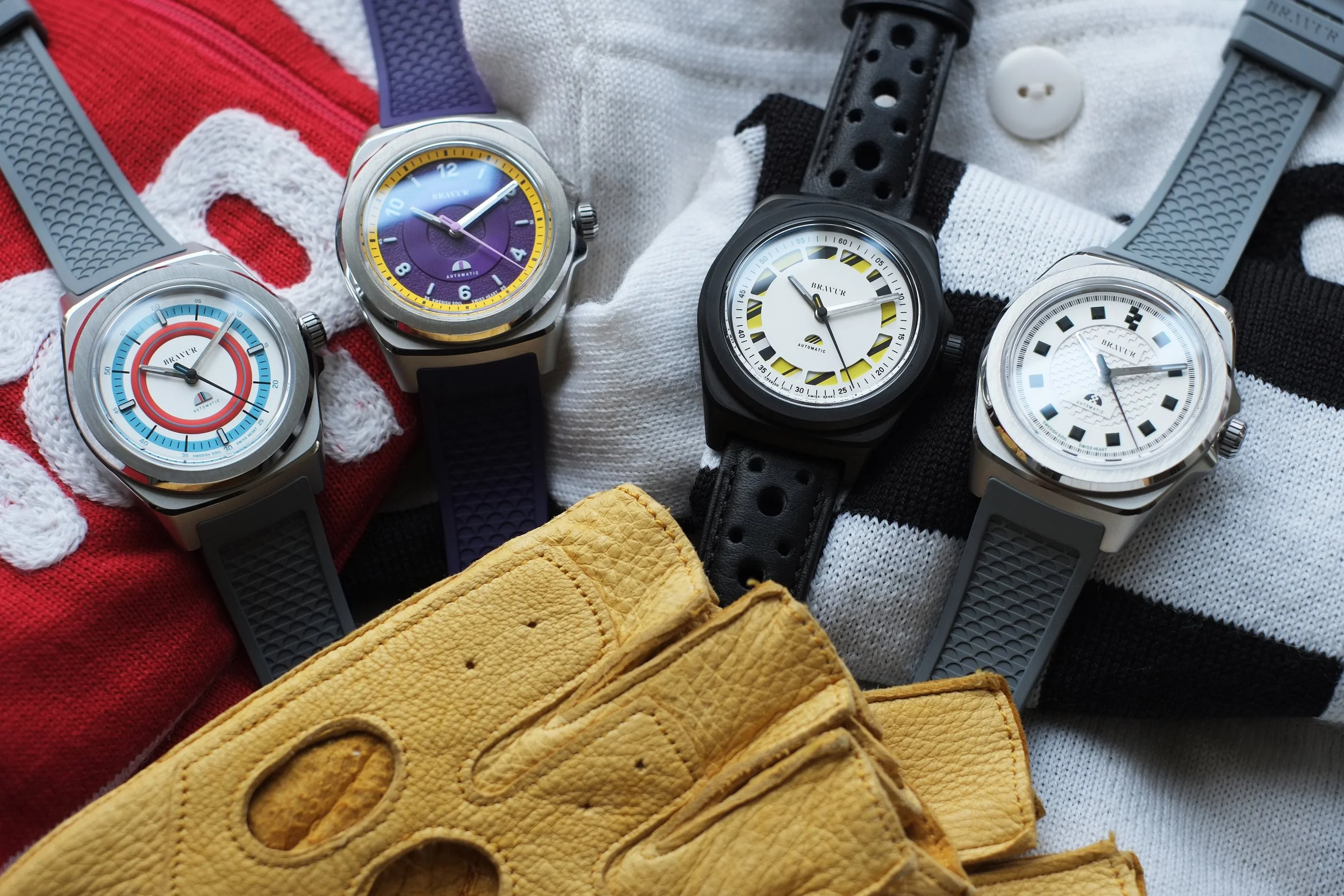
The Team Heritage collection features designs inspired by the kits of four iconic cycling teams from the 1960-80s (image courtesy of Bravur watches)
Johan shares his and Magnus’ penchant for that period and the, for back of a better word, vibe they sought to capture:
When we look back at cycling in the ’60s through the ’80s, there’s something about that era that continues to inspire us deeply. There was an elegance to the sport that feels rare today. Riders lined up with perfectly combed hair, their sunglasses were stylish rather than sporty, and the team kits — with bold color blocks and often just a single sponsor — had a purity and simplicity we really admire.
Of course, cycling has always been professional, but back then, it was also more instinctive. There were no radios connecting riders to the team car — decisions had to be made in the moment, by feel. And on each rider’s wrist, an elegant watch was a natural part of the look.
Each of the four watches features an iconic team from that era. Johan highlights how he and Magnus selected the teams:
When we started working on the Team Heritage collection, we wanted to celebrate some of the most iconic cycling teams in history, not only for their incredible achievements, but also for their timeless sense of style.
The four teams we’ve chosen — St. Raphaël, Peugeot, Renault-Elf, and Mercier — each represent a unique era and aesthetic within the sport. Their jerseys were beautifully simple, often with bold color blocks and elegant typography that made them instantly recognizable. And of course, these teams were home to some of the greatest riders of all time.
So, our choice was a combination of admiration and design intuition. These teams carried both the performance legacy and the visual identity that fit perfectly with the concepts we were developing. It just felt right, both emotionally and visually.
We first launched three models in the collection, and most recently added St. Raphaël. The idea is to continue expanding the series over time, introducing more teams and stories that have shaped the rich heritage of cycling.

Johan went on to share what drew them to these teams specifically:
Pugeot: The iconic French team, Peugeot has been ranked as the most successful in the history of cycling, launching the career of legend Eddy Merckx, who rode his first two seasons for the team.
The team's roster has included some of the most renowned cyclists in history, from Robert Millar and Charly Gaul to Walter Godefroot and Tom Simpson, who tragically passed away during the 1967 Tour de France on Mont Ventoux.
Renault-Elf: Created to promote the Gitane bike brand owned by the car manufacturer, Renault dominated the sport from 1978 to 1983. During its rather short existence, the team won the Tour de France no less than six times, along with the Giro d’Italia and the Vuelta a Espana twice.
The team's lead rider and overall ‘star’ was Bernard Hinault, who claimed four of the team’s Tour de France wins. The team also boasted the presence of Laurent Fignon and a young rising star, Greg Lemond, who began his career with the team and claimed the World Champion title in 1983.
Mercier: The French team, established in 1933, was sponsored by bike manufacturer Mercier and existed under varying names until 1984.
Raymond Poulidor, also known as 'Pou-Pou', was one of the team's prominent stars and was often pitted against cycling legend Jacques Anquetil, at the Tour de France. Never winning the Tour, 'Pou-Pou' gained the nickname 'eternal second', yet remained one of the most beloved riders of his time.
St. Raphaël: In the late 1950s and early 1960s, St. Raphaël became a dominant force in professional cycling. Sponsored by the French aperitif brand, it was one of the first teams to embrace corporate sponsorship, shaping the modern sport.
Led by Raphaël Géminiani, the team featured legends like Jacques Anquetil, the first five-time Tour de France winner. Known for their tactical brilliance, especially in time trials, St. Raphaël set new standards in race strategy and professionalism.

The collection captures central elements of the team’s visual identities. Johan again:
When we started developing the Team Heritage series, we knew from the beginning that we wanted to work with inspiration in a very subtle way. For us, it’s never about copying or being literal, it’s about capturing a feeling.
In this collection, the inspiration comes through in colors, patterns, and small design cues that echo classic cycling teams. But it’s equally important to us that the result is a watch people truly want to wear, something timeless that fits naturally into everyday life. Finding that balance between concept and wearability is key. It should never be too obvious what the design refers to; the connection should be felt rather than stated.
The watches
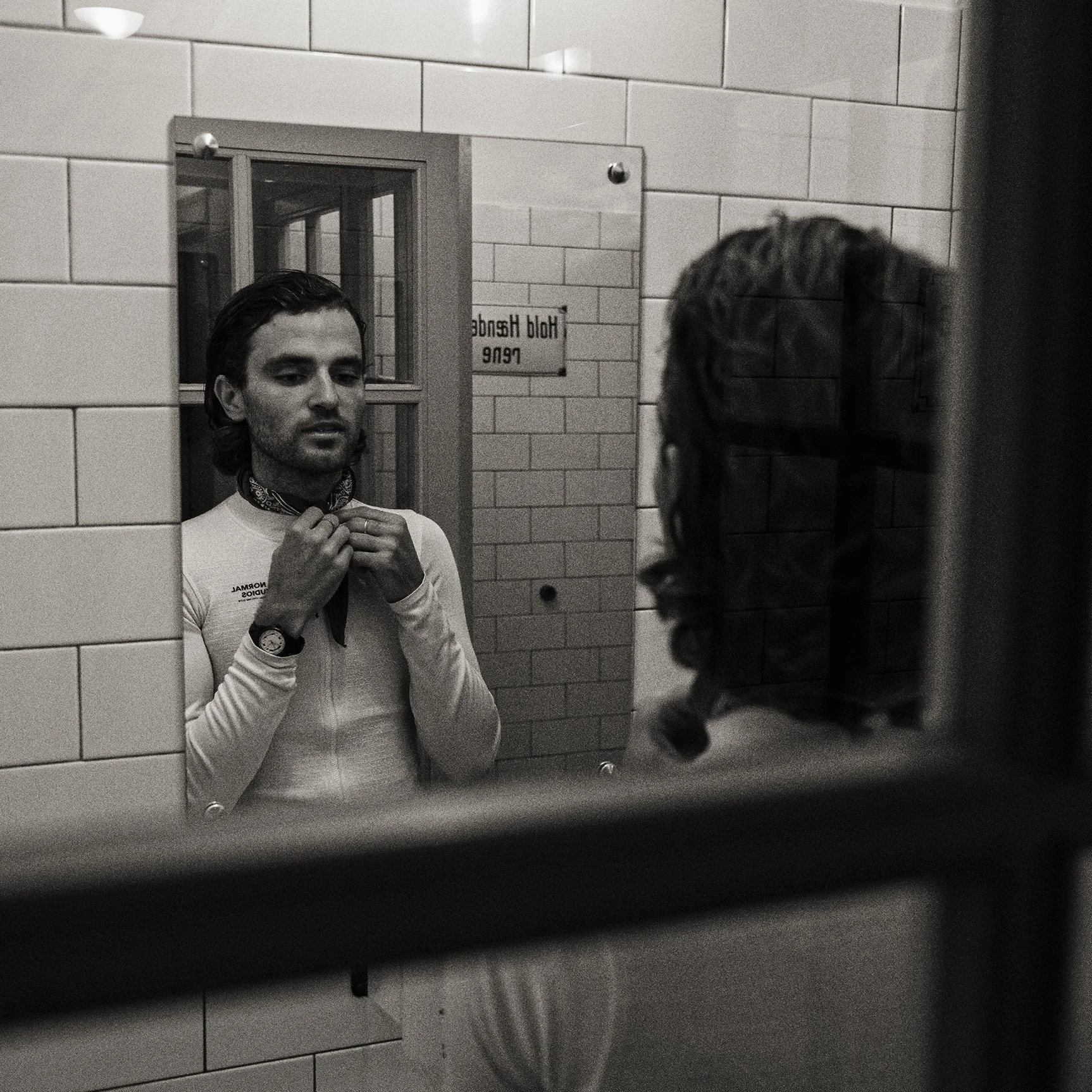
Rider kits up with the Peugeot model on their wrist (image courtesy of Bravur Watches)
Okay, but what about the watches themselves? While the watches hearken back to cycling teams in the days of yore, these timepieces are decidedly up to spec for a 21st century cycling watch.
The first thing I noticed when I got a Team Heritage on the wrist is that these watches wear very compact. At 37mm diameter and 11.4mm thick including the domed sapphire crystal (9.5mm measuring only the steel case), I could imagine this watch as an able companion on my rides. For reference, though ostensibly intended for diving the deeps and not hammering at the front of a paceline, a modern Rolex Submariner measures 40.5mm in diameter and about 12mm thick. If you’ve tried one of these on or seen them out in the wild, you can appreciate how svelte the Team Heritage is by comparison.
These watches wear beautifully. As Johan noted to me and I’ve also observed, cyclists tend to have fairly small wrists. Especially for something we might wear on a ride, it behooves a watch to be fairly compact. As someone with 6” wrist, the sizing here felt great.
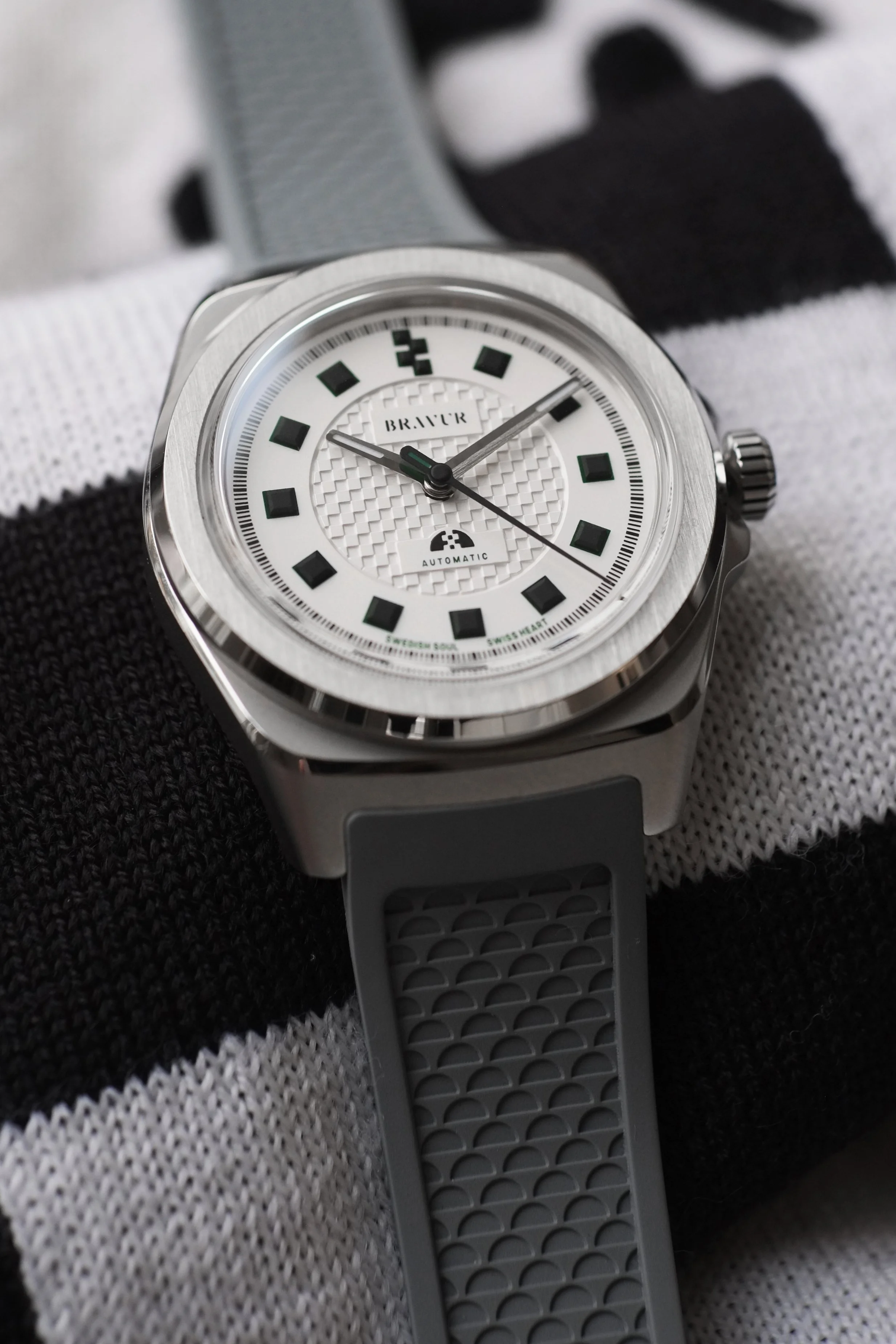
That’s not least because of the fantastic rubber strap. I’ve tried on many different rubber straps from OEM ones to Amazon specials. I can say categorically that this is one of the most flexible and comfortable rubber straps I’ve tried on. It wrapped around my wrist nicely and there was none of the rigidness or awkward flaring that sometimes besets stiffer rubber straps.
Each watch comes with the option of a rubber strap (in black or a mid grey), Milanese mesh bracelet, or perforated leather strap. Cases can be had in traditional stainless steel or PVD black.

The case construction further adds to the watches’ wearability. With a stepped case design, the lugs slope gently downward to meld into the strap’s “takeoff.” A round, faceted fixed bezel sits atop an angular midcase. Steel models feature polishing on the top outer edge of the bezel and midcase. While I haven’t had the chance to take these watches out for a ride, I’d imagine the polished surfaces would add dynamism by reflecting the trees, sky, and road. PVD models share the same case construction but without the polished surfaces given the coating.
The watches promise to be capable of withstanding hours on the bike. The domed sapphire crystal with anti-reflective coating will ensure you can check the time with minimal glare as you glance down at your wrist, likely off angle while you grip the hoods. With 100m of water resistance and a screw down crown, these watches can take any amount of sweat you throw at them. Even a surprise rainstorm and a shower after your ride.
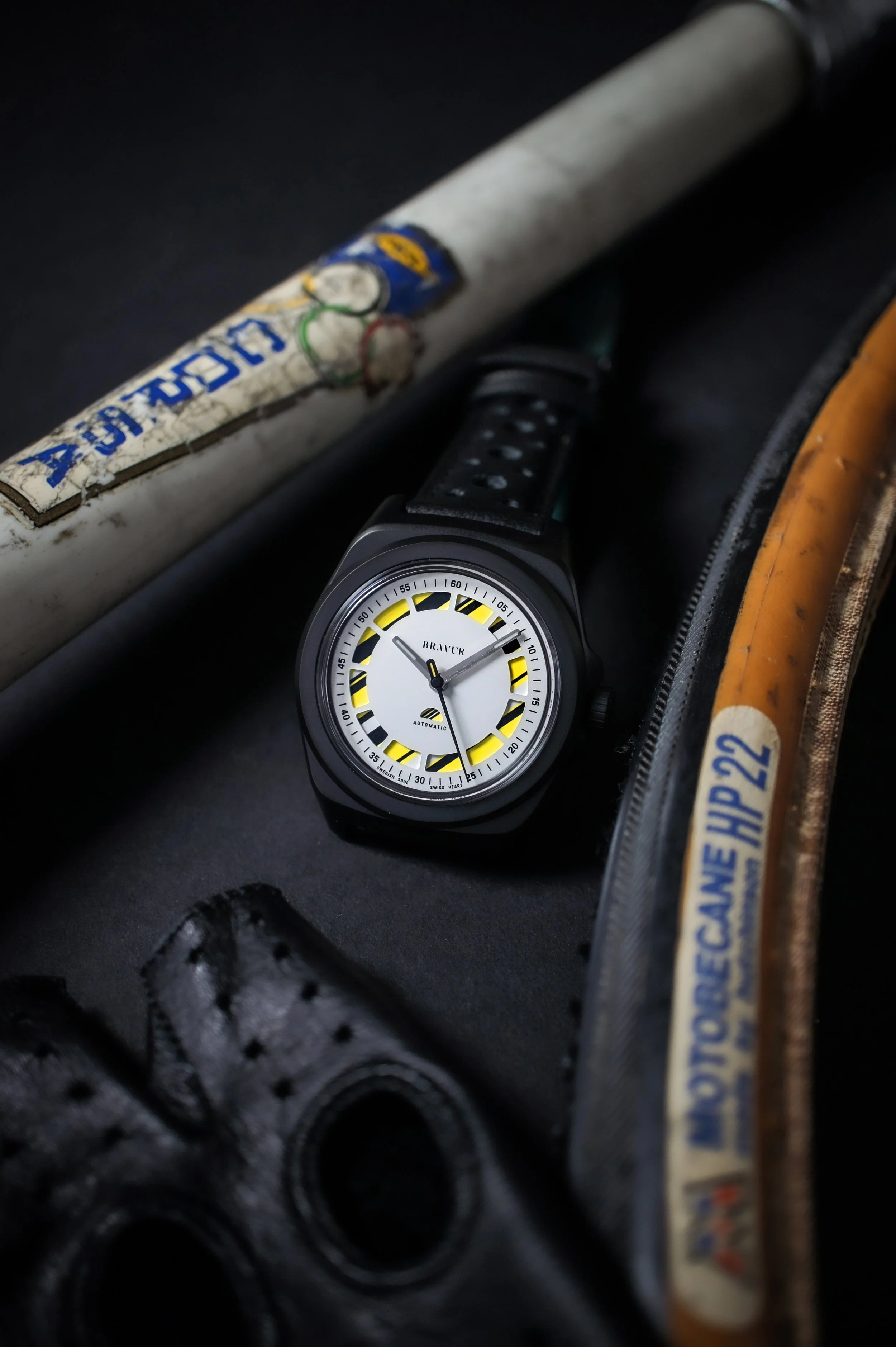
The restrained application of lume feels appropriate for what these watches are meant to be. If you want to time your intervals, you could opt for a Grand Tour chronograph. The Team Heritage series leans into the latter part of its name and chooses elegance and simplicity. Lume blocks are applied every 15 minutes, as well as on the hour and minute hands. It’s an interesting if slightly less traditional lume setup than what I’m used to, where every 5-minute mark or numeral is lumed.
Then again, this isn’t a dive watch and so the brief here is different. Moreover, cycling is predominantly a daytime activity, so lume here is a bonus more than a must have.
Interestingly, there doesn’t appear to be lume applied to the second hand. Though I’d imagine if you’re riding your bike in the dusk or dark, squinting to locate a luminous second hand sweeping around the dial might not be advised when one could instead be watching the road.

The Team Heritage series was designed to be a capable riding companion in addition to a stylish timepiece (image courtesy of Bravur Watches)
Moreover, Bravur chose to forego an elapsed time bezel or any complications for that matter. To me this speaks to the watch’s central ethos. The quartet is meant to evoke a simpler time in cycling, where bikes were ridden on feel. Head units, FTPs, and 60+ grams of carbs an hour were nowhere on the horizon. The 60s-80s was an era where riders monitored their performance but where it was measured as who won a stage and in what time, not in NP, W/Kg, or TSS.
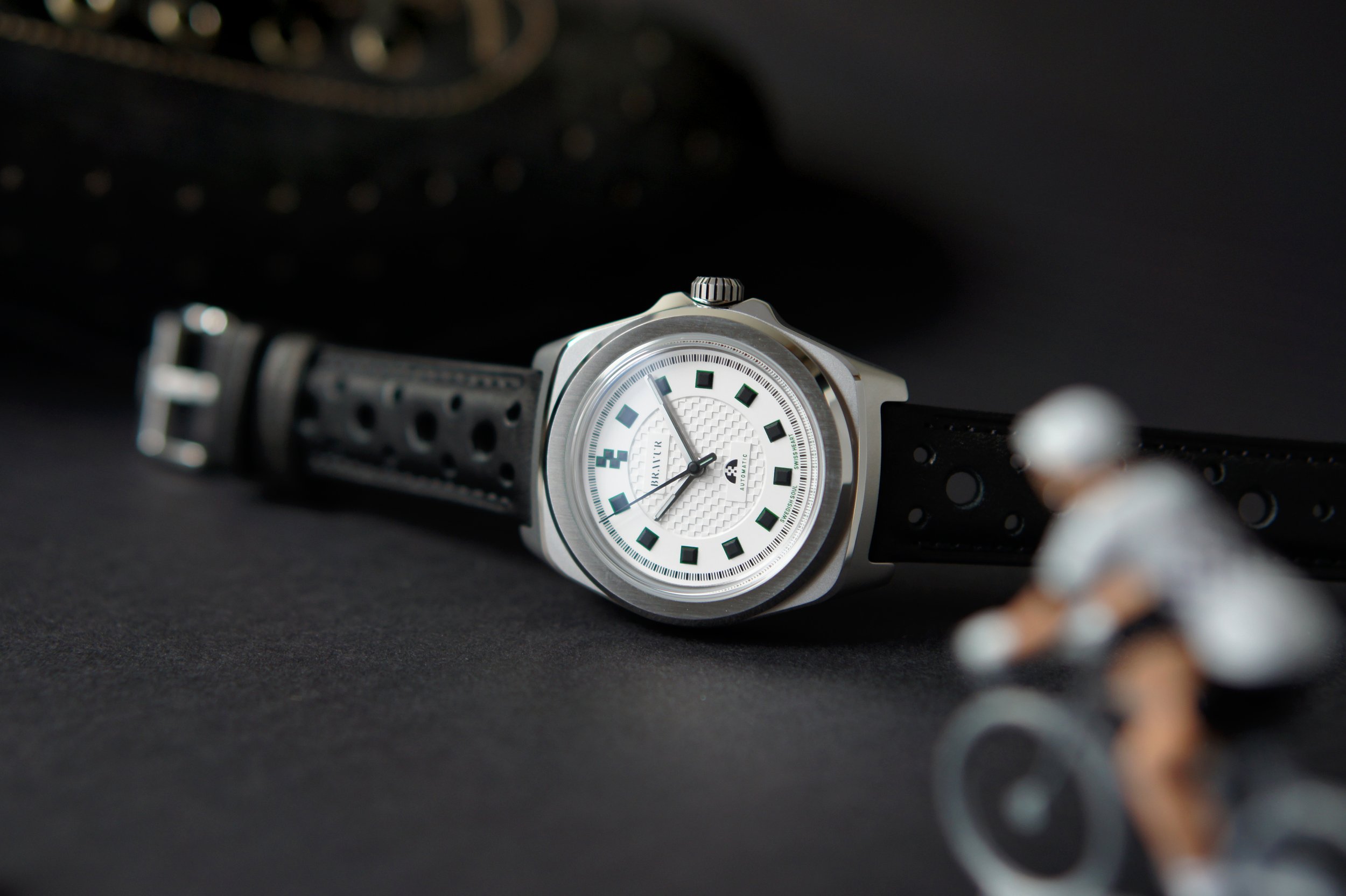
While more than capable riding tools all around, the dial is where these watches really shine. Each dial boasts a distinctive cycling cap, representing the respective team’s kit designs. All but the Peugeot feature striking yellows, blues, or reds. The Renault appears to feature a sandwich dial construction, with diagonal yellow and black stripes sitting behind the superimposed white dial. Meanwhile, the subdued black and white Peugeot dial gains visual intrigue from central cross-hatching and the finely demarcated rehaut.
My personal favorite is the St. Raphael, not least because the coloration most closely matches TBD’s kit. Specifically, I would go for the stainless-steel case and grey rubber strap, which I think compliments the white, red, and blue dial nicely. As much as I like a black watch case, given PVD’s tendency to scratch and the guilt I feel any time I mark up a watch, I’d choose a steel case variant.
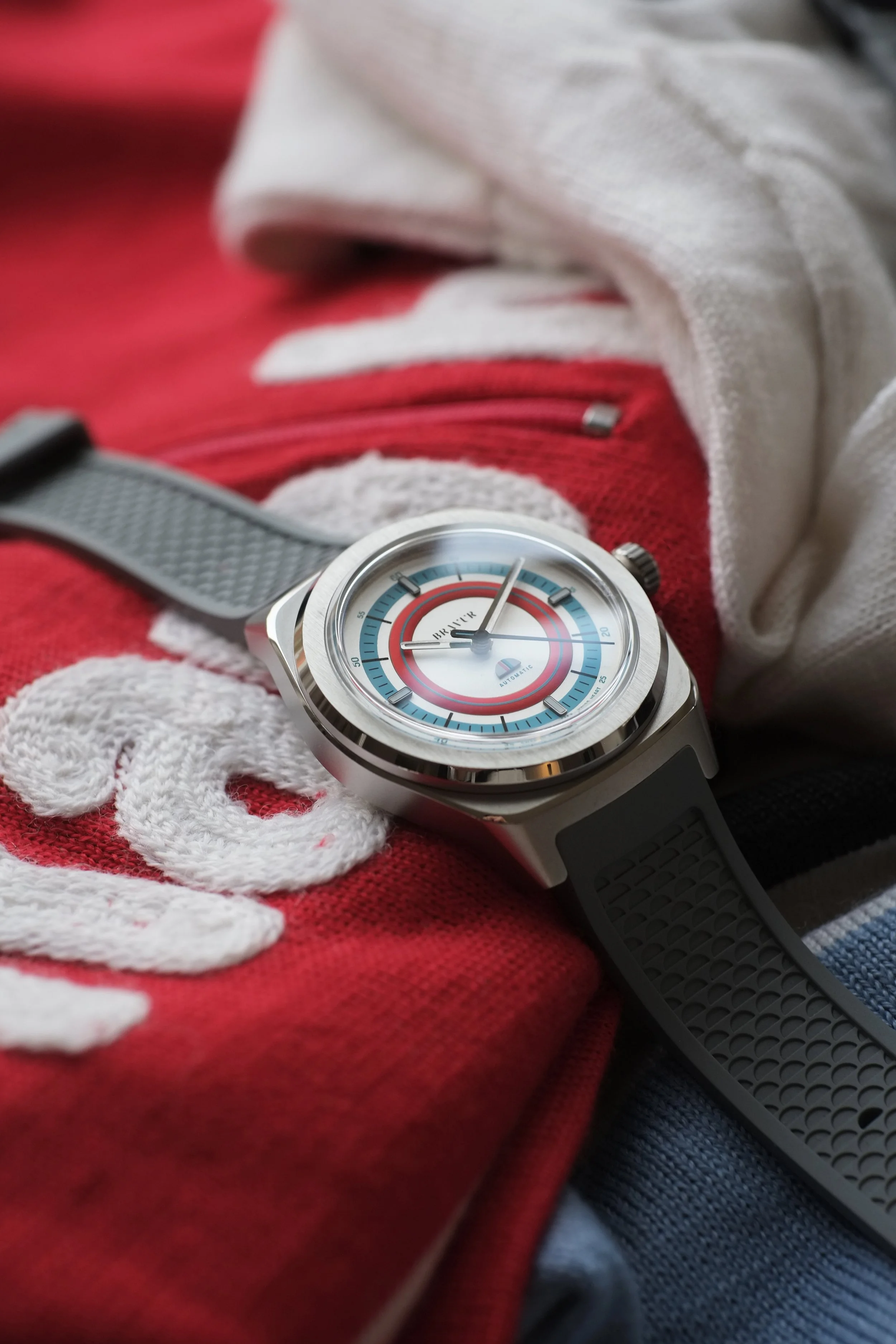
This author’s favorite dial and strap combination of the series (image courtesy of Bravur Watches)
While the dial is where the team elements are featured, Johan shares where nods to cycling are incorporated throughout the watches and even the watch “box”:
A recurring motif throughout the series is the classic cycling cap, a symbol of the era that inspired us. You’ll find it discreetly placed at six o’clock on the dial, engraved on the case back, embossed into the rubber strap pattern, and even on the buckle. It’s a quiet tribute to a time in cycling we admire deeply.
When it came to the packaging, we wanted something functional and true to the concept. We’ve never been fans of traditional watch boxes that end up gathering dust in a drawer. Instead, we created an elegant leather handlebar bag, a piece that works beautifully as both the watch’s case and something you can actually use on your bike.
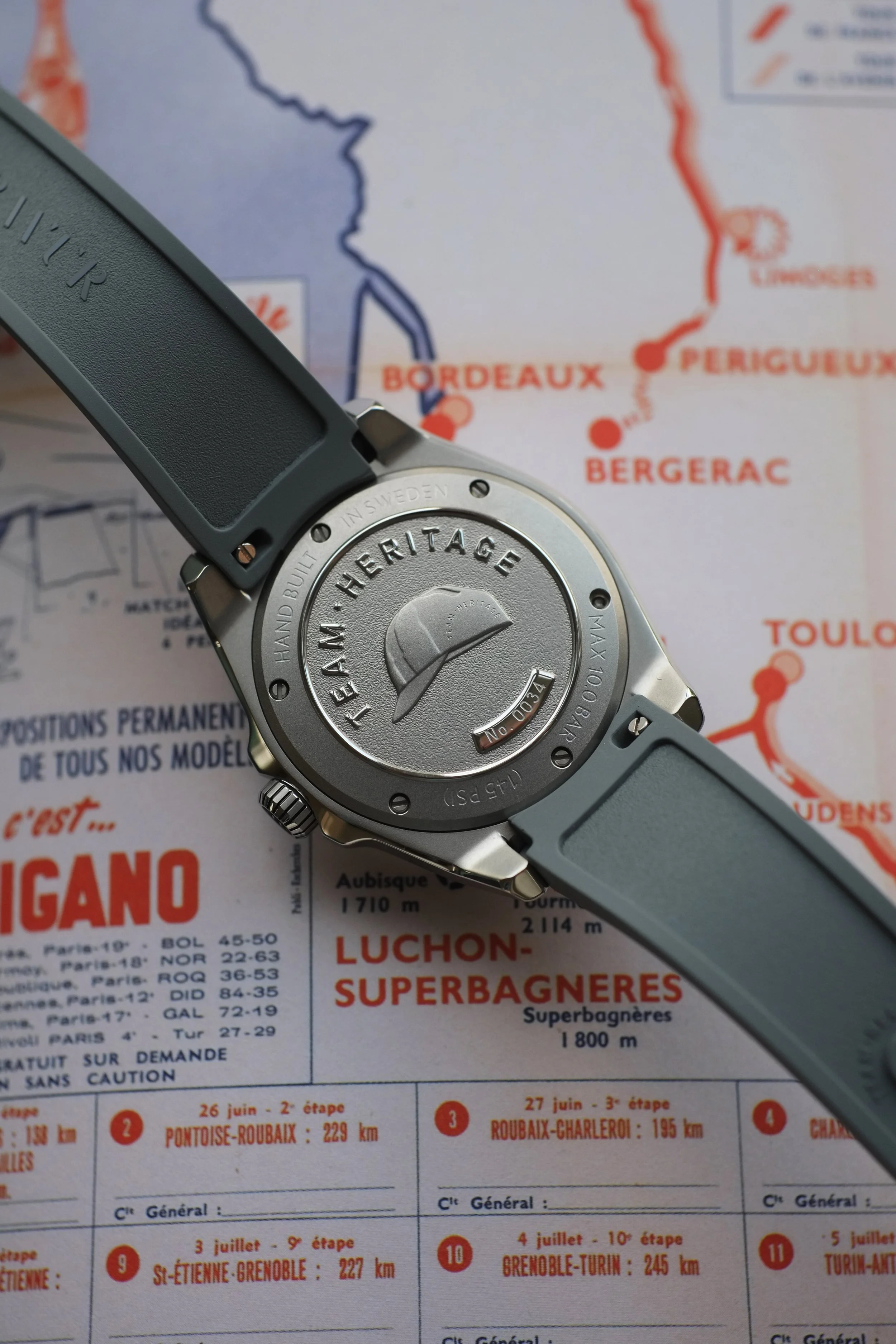
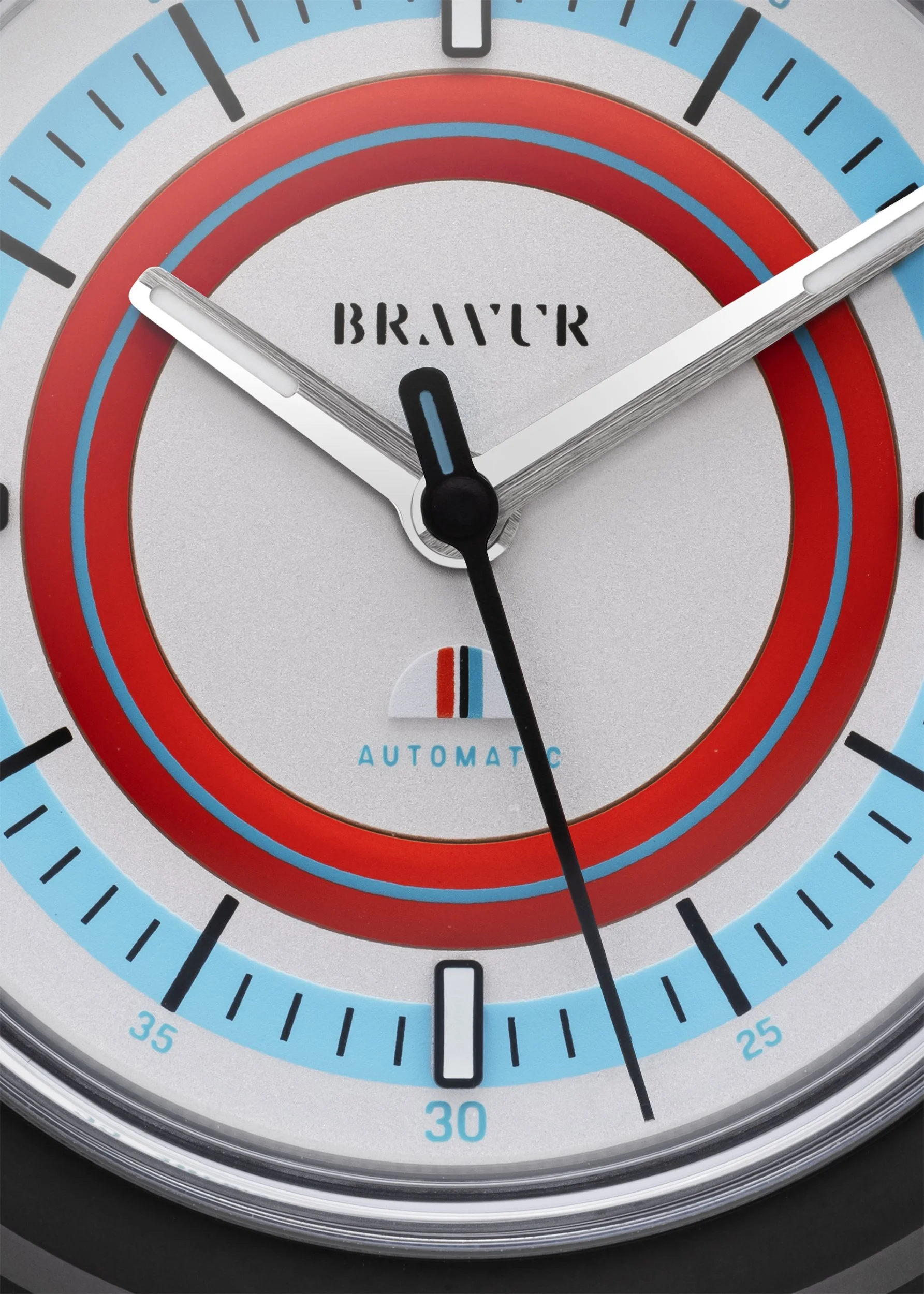
Where Team Herritage fits into Bravur’s lineup
To me, the Team Heritage collections reads as a pared down and thoughtful evolution of the Grand Tour chronographs. The new line trades the chronograph subdials for added visual intrigue on the time-only dials, paired with a more angular case shape. It works really well and I think will resonate cyclists and cycling fans of many stripes.
Johan shared his perspective on the evolution:
With Team Heritage, we wanted to explore a new side of that world. The collection brings a completely different character compared to the Grand Tour series — more graphic, more expressive, and rooted in the visual identity of classic cycling teams. Yet it still feels unmistakably Bravur, with the same attention to color harmony, proportions, and subtle details that define our work.
In many ways, Team Heritage allowed us to expand what a “cycling-inspired” watch could be. It gave us the opportunity to experiment with bolder design cues while maintaining the balance and refinement that make a watch versatile and wearable every day.
The reception from our community confirmed what we felt from the start — that there’s a deep appreciation for designs that blend storytelling, heritage, and craftsmanship.

Bravur eschew the traditional watch box in favor of a leather roll that doubles as a stylish bar bag (image courtesy of Bravur Watches)
What's next for the collection and Bravur
With two fantastic cycling watches under their belts, what’s next for the team at Bravur? Johan was kind enough to give us a sneak peak about what’s to come. Needless to say we’re excited:
We’ve always got new ideas taking shape in the background — that’s one of the most exciting parts of what we do. There’s always another concept, another design we can’t wait to bring to life.
Right now, we’re working on expanding our collection of cycling-inspired watches with a completely new concept. It’s a watch with a new case and a fresh design direction, something that feels distinct within our lineup but still carries that unmistakable Bravur DNA. If all goes as planned, we hope to launch it toward the end of [2026].
At the same time, we’re reworking the Grand Tour series — refining the design, enhancing the details, and adding a few subtle, playful references to cycling that we think fans of the sport will really enjoy. These updated models are set to launch in the middle of [2026].
And beyond that, we have a few collaborations in the pipeline that we’re genuinely excited about. Some will be revealed [in 2026], and others a little further ahead.
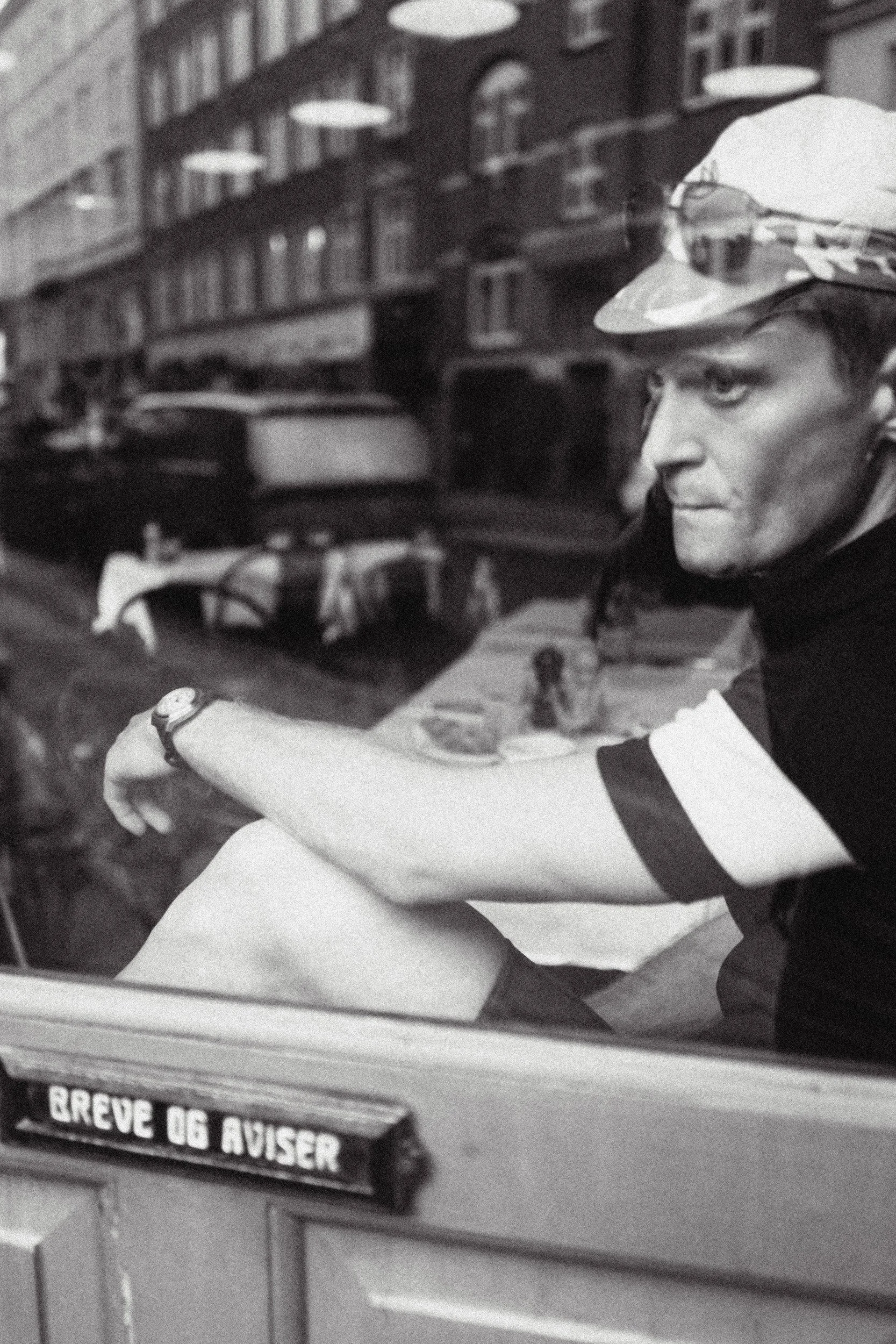
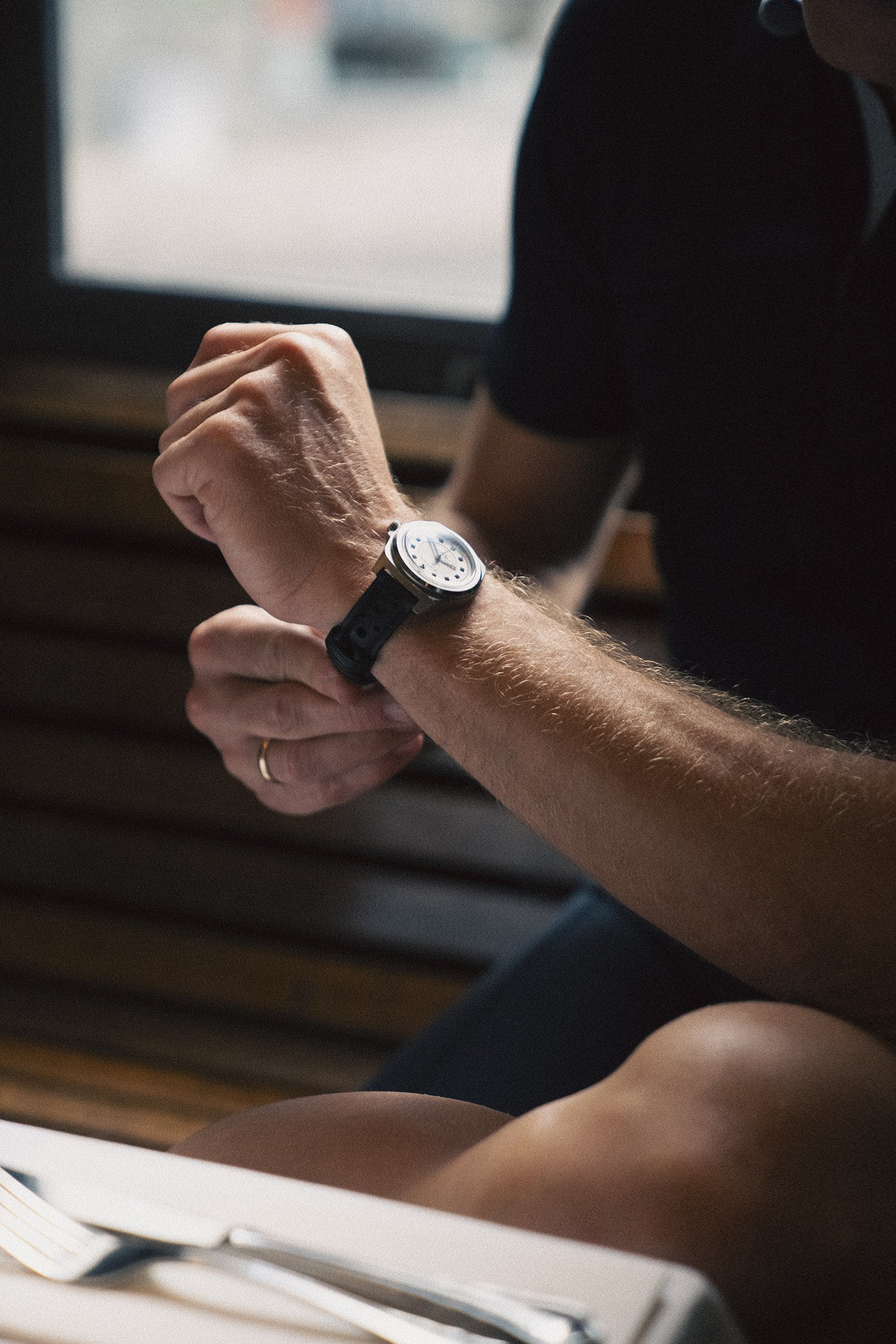
Rider eager to continue his ride after a cafe stop with the Peugeot model on his wrist (image courtesy of Bravur Watches)
We’d like to thank Johan and the Bravur team for the opportunity to showcase these wonderful watches. Specifically, we appreciate the time taken answering our questions, and sharing the photos for us to include in this feature.
You can learn more about the Team Heritage collection here on Bravur’s site.
This post was written without compensation or editorial review from Bravur.