Race Report: Iron Cross XXI (and the quest for smol gravel)
The summer road season is starting to wind down, which means cyclocross and Fall gravel is fast approaching. With that in mind, we pulled an unpublished race report from one of our favorite gravel events out of our archives. This is Tom’s recap of Iron Cross 2024.
2024 began as good as any. I found myself able to train more consistently than ever before and headed into the season with plans to race A LOT. Like all plans, they changed. Two crits and less than 90 minutes of cumulative racing left me with a fractured collarbone, surgery, two months off the bike, and a cracked road frame. All things considered, recovery went smoothly, and by mid-June, I was back outside and trying to carve out a plan for the rest of the year. The time off left me with the desire to race long races and train for them with long rides.
It was time for gravel. Yessss, gravel. But not BIG GRVL—smol gravel. Smol gravel (as defined by me) is gravel that doesn’t require airfare, lodging, $200+ reg fees, waitlists, and/or subscriptions. In smol gravel, you can have the time of your life without having to work a lifetime for it (if you’re picking up what I’m putting down).
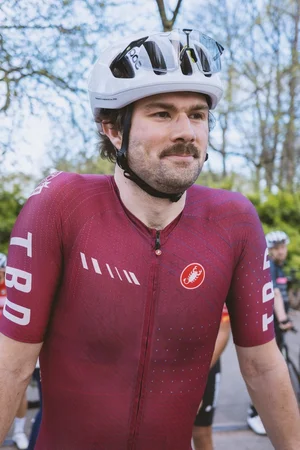
Alright, so the bike reg filters are: gravel race, northeast/mid-Atlantic, <200 miles drive, and not “expensive” (less than $120?). Results: minimal. But not nothing, and eventually, it led me to bringing the TBD kit back to this year’s 21st edition of Iron Cross.
At 9 am, 110 of us lined up (some with MTBs) outside of the senior center in South Williamsport and began our neutral rollout out of town and into the mountains for 56 miles and 6,400 ft elevation gain across almost every terrain imaginable. Having consulted the TBD Slack, those who have previously raced it reported there would be CHUNK, and I knew, to some extent, I’d be going in underbiked on 38c tires. I really could not appreciate it fully until I was there.

You see, the gravel at this smol gravel event is actually big gravel (but not Big GRVL). In fact, the gravel isn’t really gravel—it’s massive rocks, roots, and leaf-covered grass, dirt, moss, and other soft, speed-zapping terrain. Climbing on this terrain made it impossible to get into a steady rhythm. The pitches were just as inconsistent—I’d find myself having to go max effort for 20 pedal strokes up a double-digit ramp over rocks and roots, only to get about 30 seconds of “recovery” (still climbing) before hitting the next one. There were fast single-track descents that would require full concentration for every inch to avoid smashing into a rock or going over your bars as you dropped off sudden ledges. There is a section that I would describe as: bouldering.
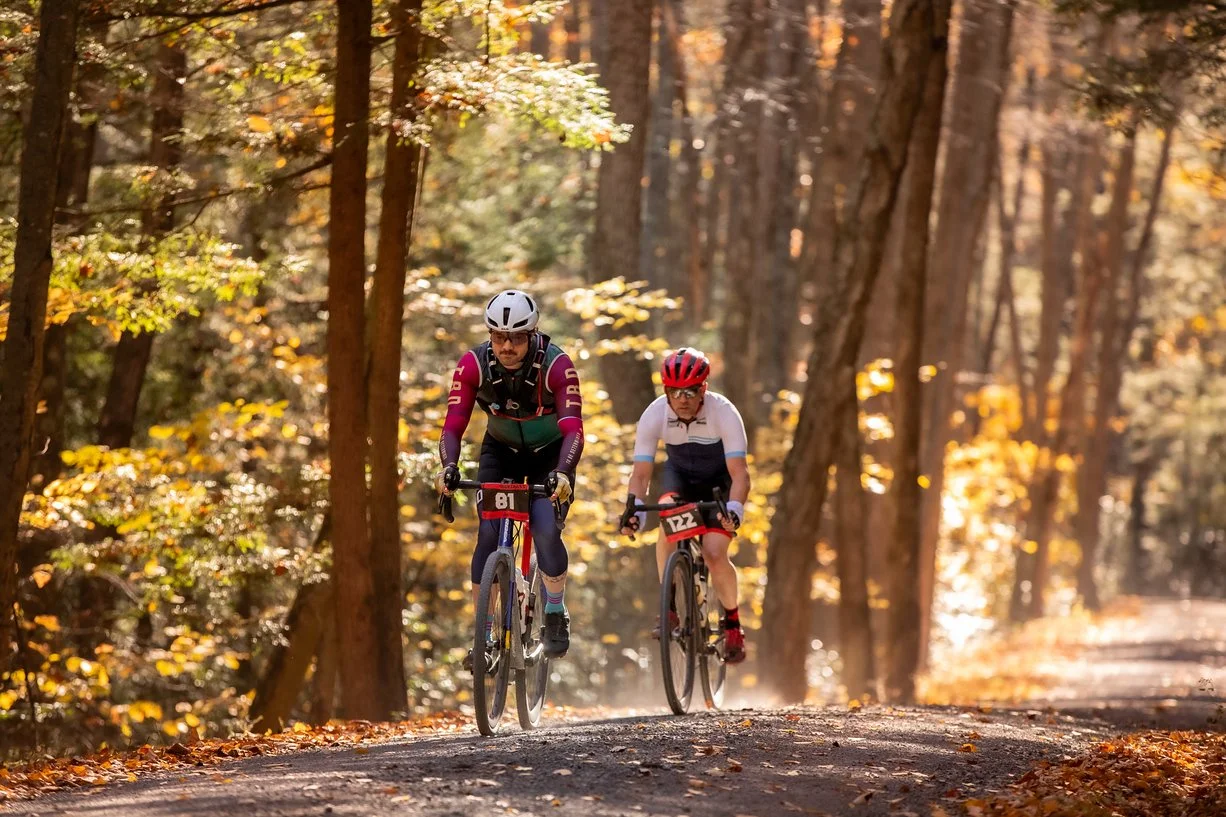
Photo: Bruce Buckley / https://www.brucebuckleyphotography.com/
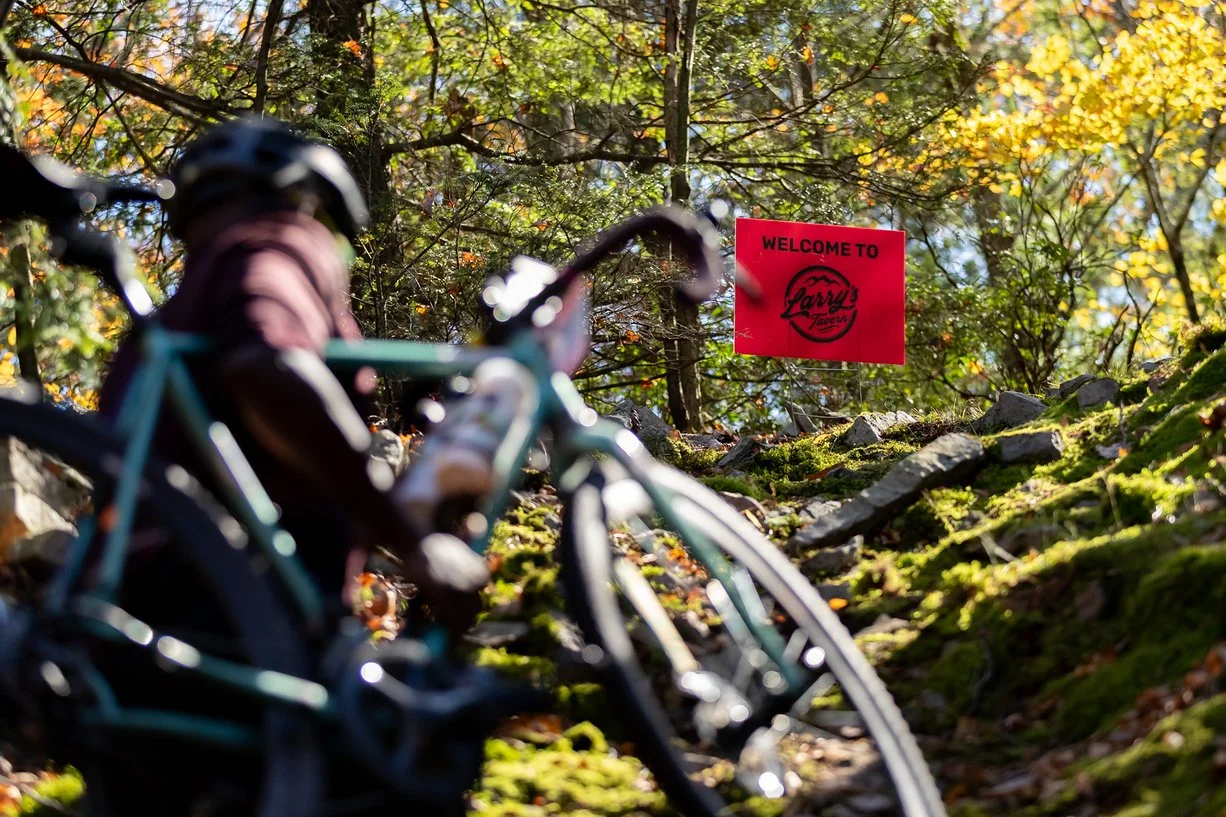
Photo: Bruce Buckley / https://www.brucebuckleyphotography.com/
I harp on the terrain because, in my view, this is what makes Iron Cross, Iron Cross. A difficult, slow (at times excruciatingly so) 56 miles. Nonetheless, it was an extremely rewarding and fun experience. The terrain is not indicative of how the race logistics went off—it’s clear that they’ve been doing this for over 20 years—and the vibes were great. It’s competitive, but everyone is humbled by that terrain at some point. There is no room for ego.
My goals were to forgo any rest stops and to finish in 4 hours. I accomplished the no-rest-stops part but finished in just under 5 hours. I was happy to finish with my bike intact after seeing several punctures and a cracked handlebar along the way. In the end, it was the smol gravel I was looking for—no fuss, minimal planning. Wake up, drive, race, drive home. There’s something really nice about that. The foliage wasn’t bad either.
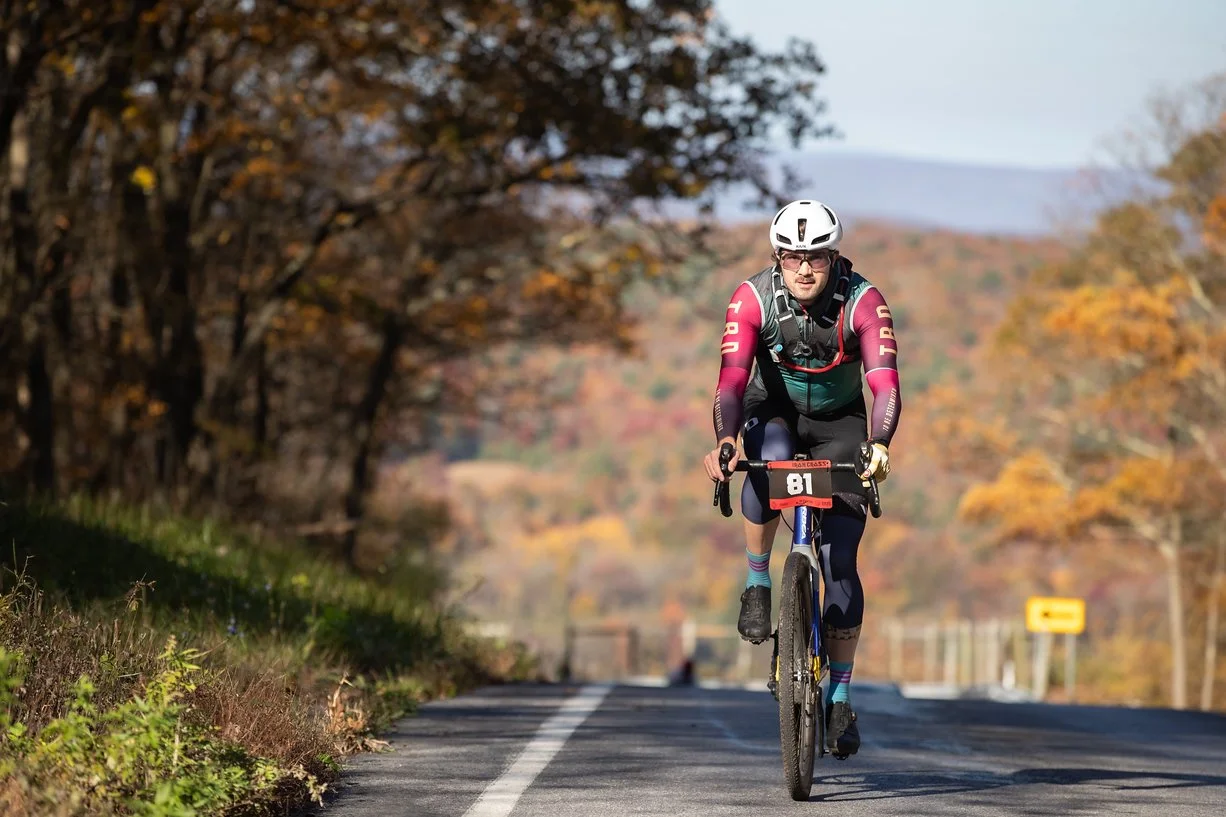
Photo: Bruce Buckley / https://www.brucebuckleyphotography.com/