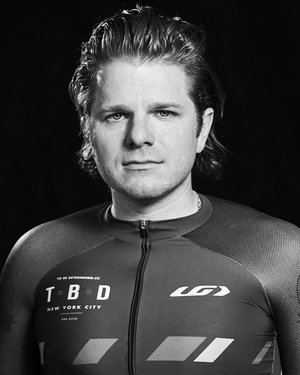
An Interview With Tom Mains: Part Two
Our two-part interview with New York City race director Tom Mains continues below. We recommend starting with Part 1 of the Interview where we talked about everything from Tom’s background as a competitive racer and pro team mechanic to recent cost challenges associated with his events.
In Part 2 below we dive into the importance of sponsorship for sustaining the local race calendar, the future of racing at Floyd Bennett Field, and perhaps most importantly, how the sport is currently missing the next generation of leadership required for the racing community to thrive. Our sincere hope is that this interview helps catalyze more racers stepping into leadership roles.
This interview was lightly edited for clarity and brevity.
A CONVERSATION WITH TOM MAINS, PART Two:
MV: You mention attempting to offset cost pressure via sponsorship, how has sponsorship trended?
TM: It has been steady over the last few years. Major corporate sponsors rarely get enough exposure from an early morning event, so we rely on local businesses and people who love the sport, such as local bike shops. Lucarelli and Castaldi have been fantastic long-term supporters, they care about the racing community and have done so much to support it. While we would love to grow our sponsorship base, economic conditions make it challenging. With everything going on in the world today, everyone has tighter budgets.
MV: In New York, we have this really strong community of teams, but teams are also seeking their own sponsors, including some that race directors are presumably targeting for events. Which makes Lucarelli and Castaldi’s commitment to supporting events somewhat unique?
TM: Absolutely, Lucarelli & Castaldi has put a lot of support into events, and we're super thankful for them and our other long-term sponsors. But we’ve also been fortunate to have sponsors step up when others dropped out.
Our clothing sponsor, Verge, provides immense value through leaders' jerseys and bib shorts. While it's not cash, the value of the custom apparel they provide is actually very significant. It is a big investment for Verge, but again they want to support our events. So if teams are looking for custom clothing, they should consider Verge given how much they support local races. Because for us to be able to offer full leader kits is a unique element that our riders embrace. It adds value to the participant experience.
That’s just part of striving to make the racing experience exciting, fun, and well-organized so people want to participate. But we really need these race sponsors like Lucarelli and Castaldi, Verge, and others to help make our events possible.
MV: What is the most challenging or frustrating part for you when dealing with racers regarding day-of or post-race logistics?
TM: People don't always take the time to read event details that we spend significant time preparing. It's frustrating when multiple riders arrive unprepared because they forgot their numbers or didn't read the guidelines regarding the jogger lanes. All details are clearly published on BikeReg. I’ve also started adding some of the info in Spanish as well. It takes five minutes to read and provides everything needed for the entire year.
But my biggest issue is when riders show up five minutes before start time expecting to register when race morning is already so compressed and usually a bit chaotic. I wake up at 1:30-2:00 AM, drive in from New Jersey, and set up the course to be ready for a 5:45 AM start.
I know that things happen that are out of our control, but it’s a very tight timeline on race morning and riders can wake up a few minutes earlier to register on time. While unexpected delays or breakdowns happen, planning ahead keeps operations running smoothly and attempting to register 3 minutes before race start is a big distraction.
MV: From your perspective as a race director, what is the best way for participants to support local racing?
TM: Participating in races is obviously the number one route. Get involved. When I got involved with the New Jersey Bicycling Association, I eventually became President—a role I've held for about 23 years now. So I oversee all of the racing in New Jersey on top of everything else I’m doing. One of the biggest problems I see is that we don’t have a new generation of riders coming in looking to grow the sport. Fifteen years ago, USA Cycling required registered clubs to promote at least one race per year. When that rule was eliminated, event promotion fell onto a small group of individuals. And that small group has only gotten smaller as promoters retire or move away from the sport.
I got involved in the sport when I was 28 years old and excited about growing the sport and giving back. Back then people like Team Somerset or, when Ken Mills was around doing all his races in South Jersey, or Jason Bradley doing all the road races in South Jersey, they were also giving back to the sport. But that generation of race directors moved away or aged out, and there's not that new group of 25, 30 year olds that are both super excited about bike racing and they also want to give back to the sport. Most of them want to get a cool jersey and just race their bikes. Finding new volunteers and promoters who want to give back is a huge challenge. Many of us experienced organizers are happy to help new directors navigate town permits and insurance, but we need those riders to raise their hand to get involved. We also are always in search of new officials. That is a nationwide problem.
MV: Yeah, that leadership void is concerning given we can all see the race calendar getting smaller and smaller over time.
TM: Beyond promotion, recruiting and retaining riders is essential. CRCA does a great job with their development programs. I would love to do more in that vein, but I don’t have the support of a big club behind me in Prospect Park to help make that possible. When you look at USA Cycling statistics showing that Cat 4 and Cat 5 rider churn is between 40% and 60% after year one, that is a real problem. Welcoming new riders, accommodating beginners, and guiding them into clubs goes a long way toward improving the sport. I don’t have all of the answers on this front, but we have to keep bringing new riders in and trying to keep them in the sport.
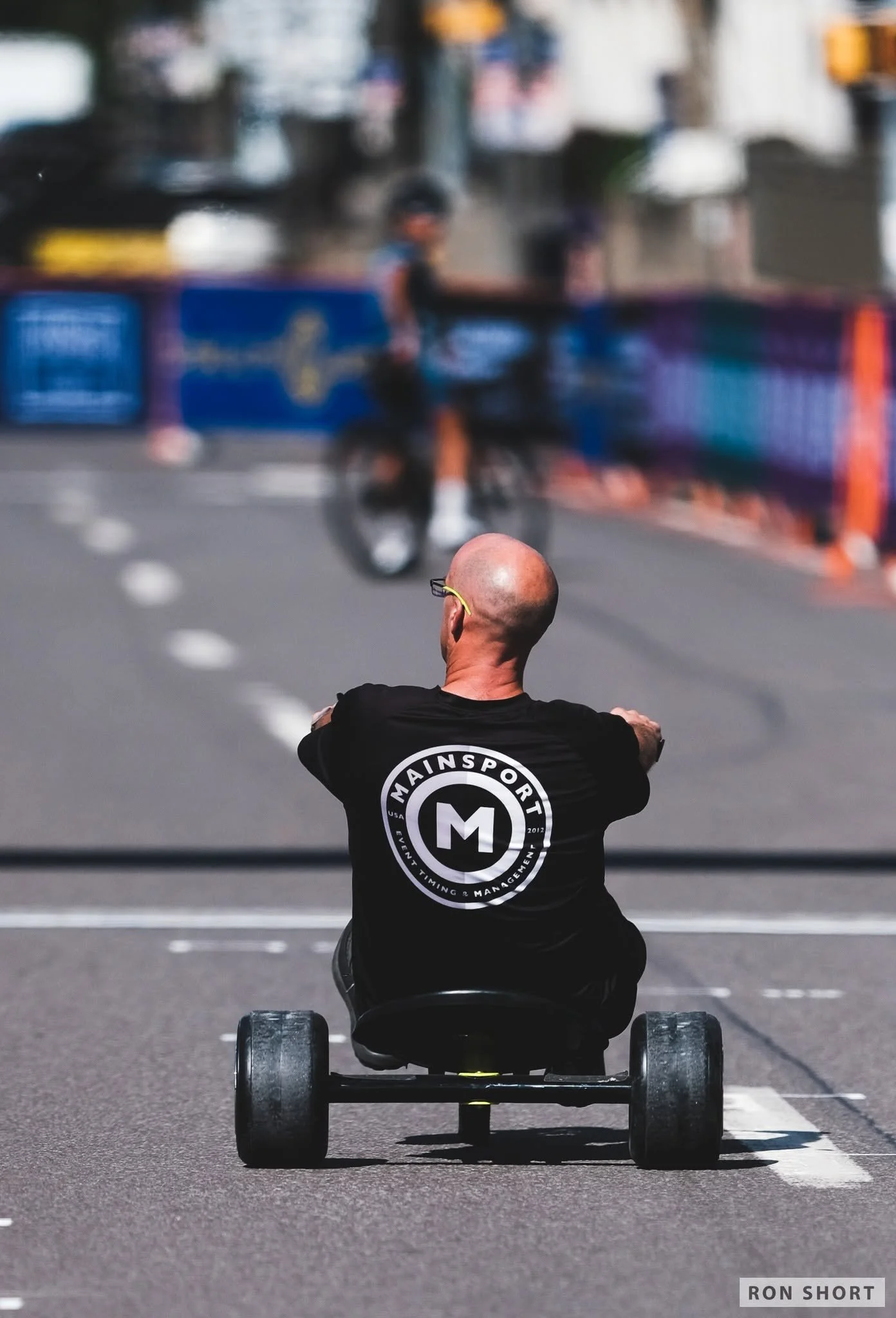
Tom enjoying a break between race timing with a little big wheels action (Photo by Ron Short)
MV: You mentioned new venues earlier. During my time on the CRCA board, we searched for years for new race venues in New York City, but only found Orchard Beach. Securing new venues in the city is extremely difficult.
TM: It is. But that is part of why it is so important to build the race community because often, new venues come from a club member who has a connection with a local park director or municipal official. That's how the Tour of High Bridge was re-established; the local park director is an avid fan of cycling and collaborated with local riders to bring back racing. They called me and I went to town meetings, I went to the park with them, we developed a budget, and then they ended up hiring me as race director. And the ultimate result was that we brought a race back to a downtown area where it has been embraced and supported. We need to leverage existing community relationships to unlock new venues, start downtown criteriums, or park courses. There are people in the community who can help us find more venues, which would be so valuable to racing.
MV: I wonder if there's a way to get the New York City teams to focus more on that opportunity. It’s not easy given teams have their own priorities and coordination can be challenging.
TM: It's not easy, and a lot of people get scared and decide that they do not want to take on the risk of organizing a race. Which, I get it, but a lot of that can be mitigated and there are a lot of resources out there including experienced promoters who will be happy to assist, especially if a viable venue is in place.
MV: You support over 160 events a year. What common elements or best practices stand out among successful events, whether it is the “experience” like Easton or Somerville or more grassroots like Prospect Park?
TM: There are a lot of things that go into a successful event. There are a lot of race directors today that are very good at marketing. Organizers like Gabe and Kacey Lloyd do a great job with Easton and Somerville on social media, which is very powerful. Municipal backing is equally important; the Greater Easton Development Corporation actively supports their race in a way that is pretty rare.
Not a lot of people know this, but 8 or 10 years ago there was a point in time that the Tour of Somerville was close to going away forever. And a lot had to happen in the background to save it. We had a longtime Somerville resident that I worked the race with for several years, but when he moved away I just couldn’t do it all. So I turned the race over to Gabe and Kacey to help lead it. I still provide a lot of operational services for those events. But it is strong municipal partnerships, including public works and local police, that makes these races viable; Somerville couldn't operate if required to pay full commercial police staffing fees of $30,000 to $40,000 per day. And Easton benefits a lot from all of the events that the municipality runs alongside the race.
Separately, destination events like Tulsa, Gateway Cup, or Somerville thrive because riders prioritize their limited time and travel budgets around marquee multi-day weekends. So that is another type of event that seems to be thriving even in the difficult road racing environment. The harder part is getting the other races that don’t have a full weekend of racing or that are more grassroots to fill in some of the gaps in marketing and experience to get back to growth after some tough years.
MV: From your experience, is your sense that off-road disciplines like gravel, cyclocross, and mountain biking are outpacing road racing in growth/stability?
TM: Off-road disciplines have a lower barrier to entry, which I think will always give them a better opportunity for growth. Road racing, criterium racing and circuit racing all have a high barrier to entry given perceived danger and cost. And in a criterium, a beginner who gets dropped might do three laps and then get yelled at by an official to exit the course. That can be your entire race experience for a criterium, after which you go home having raced for 10 minutes. Is that a race that you want to go back to?
Whereas in cyclocross, if you get dropped, spectators are still going to be cheering for you and then someone is going to do a dollar bill handup for you. Off-road formats offer a more welcoming, participatory environment, which explains their better opportunity for growth. But coming back to road racing, there is no easy solution to that one, given you can’t leave dropped riders on a crit course for safety reasons.
MV: That makes a lot of sense and feeds into why TBD directs our development grant funding into off-road racing, where the barrier to entry for youth riders is lower and we hope we can keep those riders in the sport for longer.
TM: Absolutely. Years ago we in New Jersey embraced NICA when USA Cycling was not necessarily playing nice with NICA. And given the NJBA has a trailer full of cyclocross equipment and supplies, we made all of that available for the Spring NICA season because we wanted to convert those kids into long-term races.
We need to find the next Kate Courtneys and Chris Blevins that came from NICA and now they’re doing amazing things in the pro ranks. We want to find more of those. Same thing with the Dev programs. That is another way that off-road racing can support broader racing growth.
MV: Are you seeing the success of NICA in New Jersey translate into growth for other disciplines?
TM: It is hard to say and perhaps it is not super prevalent yet, but if you look at riders like Aidan Vollmuth, he came up through NJCX and NICA and he just finished top 10 at a UCI race this past weekend at Rochester but he’s also racing on the road doing events like Green Mountain Stage Race so there is definitely some amount of it.
So the pipeline is active with these kids that are coming through programs and staying in the sport. But that involves more than just NICA. For instance for the NJ CX Series we tweaked our schedule to introduce more women’s and beginners clinics, or in some instances a NICA clinic. So that is just another instance where we are taking a safe venue with a lower barrier to entry and trying to get kids on the bike who hopefully progress into road racing. Though unfortunately the barrier to entry for road racing is always going to be higher.
MV: I do wish there were more cyclocross venues closer to New York City to help grow those development opportunities in CX. We lost venues like Rainey and Croton, so there is just more and more driving left.
TM: It is a shame. As you know, we lost a lot of racing during COVID and it has been slow to come back. There are those venues that don’t want the race to continue and there are race directors that get to the point where they move away or retire. And it's just a shame when you lose those venues or those experienced directors. But if there are contacts with some of those venues and an opportunity to continue racing there, we will find someone to run that race.
MV: In that vein, I still think about bringing back the Orchard Beach Crit. It was such a simple race to run and yet a fun day out for the local community.
TM: That was actually discussed earlier this year, and I think next year whether it’s me or someone else, we should definitely take a hard look at bringing that event back.
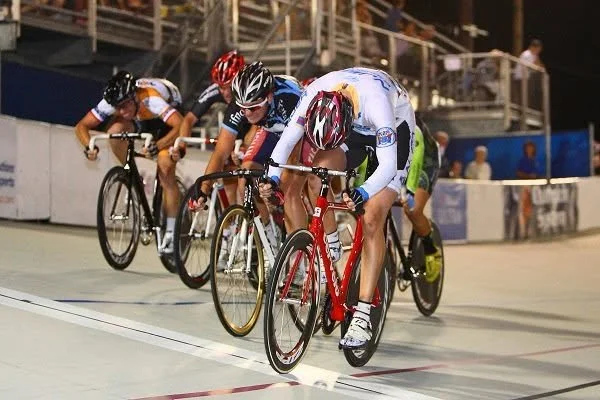
Tom taking home a win on the track.
MV: Let's definitely follow-up on that, I’d love to help with Orchard Beach. But what about everyone's favorite weekday race that is on hopefully temporary hiatus. Any word on Floyd Bennet Field?
TM: We have not given up. The vendor that was in the buildings was Aviator Sports and they’re now out of business. But during their hiatus, the park decided they weren't going to issue special event permits because that process had been managed by Aviator and National Parks staffing has been decimated during the current Administration.
I went to National Parks and talked to them and there is a new vendor that just moved in. They haven’t started permitting, but we’re not giving up and we hope we can reach an agreement for a long-term deal that secures racing at FBF. And for our FBF races they are entirely self-contained - we’re providing all of the services - so we’re not asking for anything from the vendor other than access to the course.
I am probably a little more hopeful now than I was previously because the new vendor is moving in and hopefully they’ll sit down and talk with us to figure out a workable situation. I’m hopefully going to bring it back next year and if so I’m sure it will be bigger and better than ever.
MV: I love that, as part of the data analysis that we have been doing, it has highlighted how the loss of weekday racing at as Floyd, Rockleigh, and some volatility at Kissena has left a huge void in the local calendar.
TM: Weekday racing is so important for the local scene, both the region and the NYC community. And FBF is a race that I really enjoy running. They are long days, but it is a unique venue and the racers really embraced it in the years that I was running it.
So I have some ideas for some changes and additions if we are able to bring it back. There is a good group of people working in the background to help support this effort, whether it is working with parks, going to meetings, or otherwise supporting the race.
MV: We touched on this, but one thing on the front of my mind is how do we better engage the cycling community, which is so full of talent and relationships, to help grow the sport?
TM: It is a super important topic and unfortunately it is hard for park racing with some of the restrictions that we have at those venues. I do think CRCA has done a great job with their development fields. I would love to do something like that, but we just don’t have the space for it or time in our schedule.
But if we can bring Floyd back, we can go back to doing stuff like running a dedicated junior race that starts 30 minutes before the other fields. Or we can do standalone clinic fields. All with the goal of bringing in new racers. So there is lots that we can do with FBF specifically, but we have to get the venue back first. That is the first step
MV: FBF is the perfect venue for stuff like that. I remember running short-track races for kids there when I organized a few weekend races at FBF years ago.
TM: I've even been thinking about, again coming back to budgets, opportunities to improve the experience and get more spectators out to races by doing stuff like a weekly 5K series. If we could get runners to come out to FBF, we have the space, so why not do it? Maybe a runner gets interested in racing?
There are a lot of major events like Tulsa and Easton that are going that direction to include running races. Running is another of those participation events where anyone can do it so you’re not limiting yourself just to competitive bike racers. And it draws in people who wouldn't necessarily even know that a bike race is happening in their town. And FBF has always been a lower entry fee race and I want to keep it that way. Thankfully if we can get the venue secured, we have some initial funding ready to go via the GoFundMe from a couple of years ago, so we can help get the series off the ground quickly. So, I haven’t stopped thinking about Floyd.
MV: I always thought that adding a 5K running race at Grant's Tomb in the middle of the schedule would also be a hit.
TM: Grants is actually a phenomenal idea because I also think that we could probably streamline some of the categories a little bit, especially with recent turnout, and have more time to do something like that with a 5K. And it is just a fantastic venue for bike racing and running races too.
MV: So it appears that we have some great ideas, and yet the race calendar has been getting smaller and several NYC races struggled with attendance this year, how do we fix that?
TM: Stepping back, there are lots of challenges for road racing and unfortunately not enough solutions yet, but we just have to keep working at it. We have to get more clubs involved and get more people involved. Whether it's bringing new people in or finding a venue or taking that leap into directing a race and giving back to the sport. Any of those things help, even if you do just one of them.
It’s just good when people learn a little bit more about what goes on behind the scenes. Because people just don't realize everything it takes to keep these events going. I know they’re appreciative, but at the same time if we can get more people involved, then things can get so much better from here.
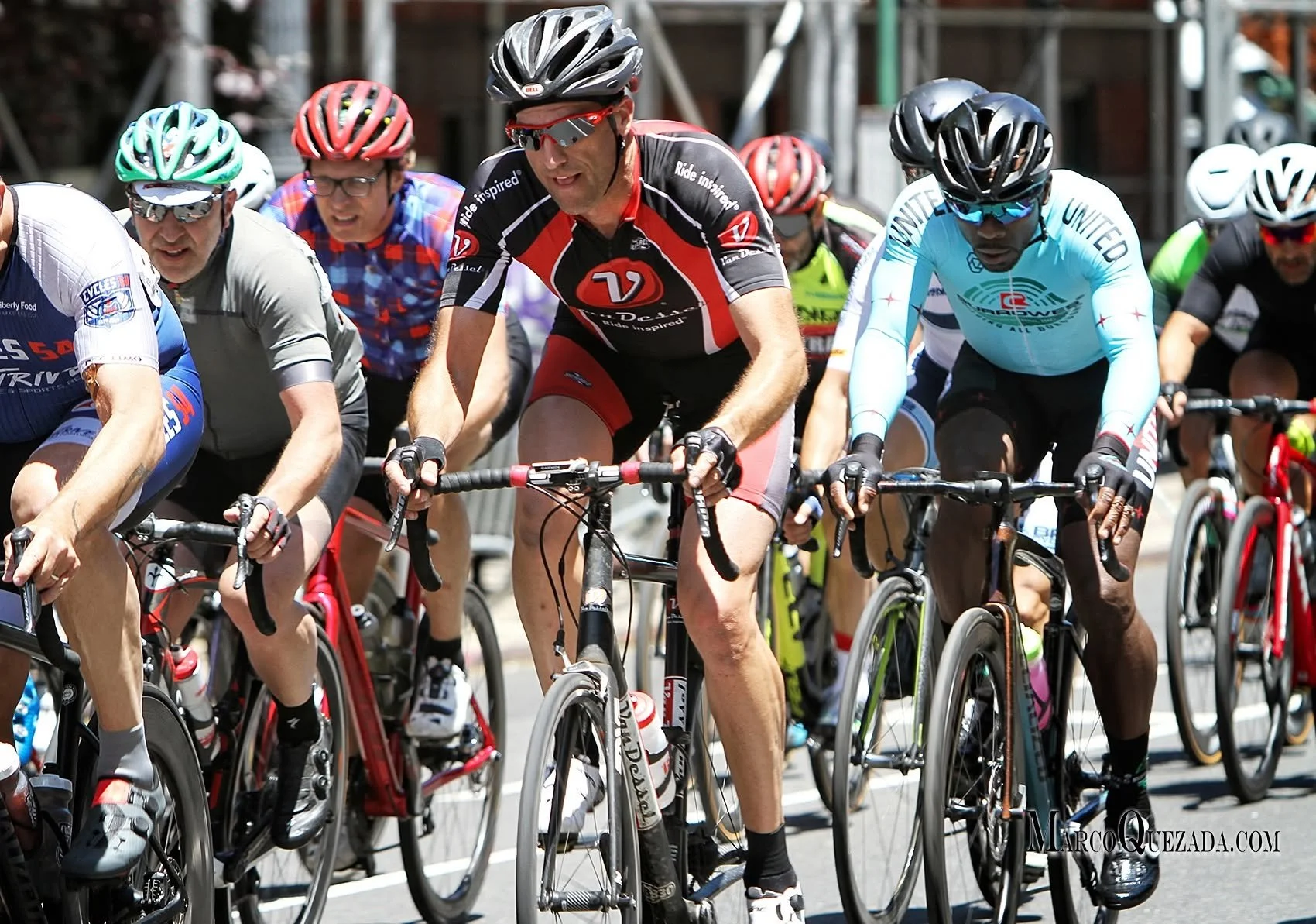
Tom in action at the Harlem Criterium (photo by Marco Quezada)
MV: Right, the depth of talent in the scene is huge, we just need to better engage with them, to have them focused on growing the sport?
TM: It doesn't have to be directly race oriented either. We've had situations like when I took over NJBA and our non-profit status had lapsed. But a lawyer in the racing community got involved and got us back up and running for free. That was $5,000 we didn't have to spend on a lawyer and could instead keep in the sport. Or when the Floyd stuff was going down, there were great people in the background that are good at research and who dug up information and filed FOIA requests that I never would have been able to do. And that kind of stuff can really help the sport. So, it doesn't necessarily need to be someone stepping up to be a race director. Just get involved, and do something that's not just focused on getting a cool jersey and riding a nice sponsored bike.
MV: To that end, what is the best way for racers to contact you with feedback or ideas or desire to get involved.
TM: Email or text. My phone number is listed on all BikeReg pages, and I am accessible and responsive to inquiries, questions, and feedback. I’ll almost always answer the phone unless I’m super busy. I want people to get involved. If they have questions, they’ll get answered. If they have complaints, I’ll listen to them. Sometimes those complaints are valid, sometimes there is a reason for why I did what I did and the rider may not like it. But we always try to be accommodating.
Do you know that we get calls every single year from recreational riders looking to participate in the Tour of Somerville, which is actually a little piece of history that not many people know.
MV: I’d love to hear it.
TM: The Tour of Somerville has that name because when Pop Kugler founded the race in 1940, Main Street was a state road and state roads were prohibited from hosting competitive events. So he named it the Tour of Somerville to bypass state rules restricting bike races, and the name remains today.
MV: That's amazing.
TM: It is. But every year we also get recreational cyclists asking where the Tour goes and how do they participate. So I have to explain to them that it is actually a competitive criterium.
MV: I love that factoid.
TM: Yeah, I have a lot of stuff like that from my involvement in the sport, and from people like Joe Saling who has been involved in like 70 of the 83 Somerville editions or something. There's a lot of history that people don't know about, and a lot of reasons for why events are run a certain way.
MV: What a great note to end it on, thank you again for taking the time to speak. This was a super interesting conversation and if nothing else, I hope by publishing this, we’ll get some folks raising their hands to get involved with supporting the sport.
TM: Yeah, even if it's only a couple people, it makes a real difference. Because hopefully you’re going to find that one person who is like me, who gets involved in the sport and winds up staying involved for 25 or 35 years or more. There are good people out there that we just need to identify and get involved. Because I'm not going to be here forever. I'm gonna be around for a while, don't get nervous, but not forever.